Macro · Japan
Japan's Turn
Where We See Signs of a Bottom
Bull, Bear, Bust · 5 May 2026 · 9 min read

The Japanese market has been a frustrating story for years. Undervalued, overlooked, and perpetually waiting for a catalyst that never seemed to arrive. But over the past several months, something has shifted beneath the surface.
KEY POINTS A quick-read snapshot of this newsletter's commentary
▸ Japan has moved past the point of maximum pessimism in select sectors — we are not calling a broad market bottom, but specific, structural dislocations now meet our criteria for contrarian interest. ▸ Three forces underpin the contrarian case: the genuine end of deflation with sustained wage growth, corporate governance reform driving record buybacks and dividends, and depressed valuations relative to the U.S. and Europe. ▸ Semiconductors and advanced electronics (Tokyo Electron, Disco, Lasertec, Advantest) have been punished as if interchangeable with U.S. tech — a mistake; they are enablers backed by the USD 550 billion U.S.–Japan investment partnership. ▸ Automation and robotics leaders (Fanuc, Yaskawa, Keyence) have been sold off as if speculative growth stories — the demand driver is demography, not hype, and Japan has no choice but to automate. ▸ Trading houses (Mitsubishi, Mitsui, Itochu, Sumitomo) trade at single-digit P/E with dividend yields above 3% — caught indiscriminately in oil-price and risk-off crossfire despite benefitting from higher commodity prices. ▸ Two risks we are sizing positions around: oil spiking to USD 150+ on Iran escalation, and the divergence between resilient retail sales (+1.7% YoY) and softening manufacturing PMI (51.6). ▸ Our 25/50 moving average and breadth indicators are flashing amber, not red — select names show relative strength against TOPIX, often the first sign of institutional bottom-fishing. ▸ Current stance: small, exploratory positions in semiconductors, automation, and trading companies; prepared to scale up gradually if weakness persists into May–June without fundamental deterioration. |
While the Nikkei 225 has shown volatility — falling notably in late April trading after the Golden Week holiday, with weakness across automakers and financial stocks — the broader picture suggests that certain sectors have moved past the point of maximum pessimism. We are not calling a broad market bottom. What we are seeing are specific, structural dislocations that meet our criteria for contrarian interest.
Here is what we are watching and why.
The Contrarian Case for Japan
Before looking at specific sectors, it is worth understanding why Japan has moved onto our radar at all.
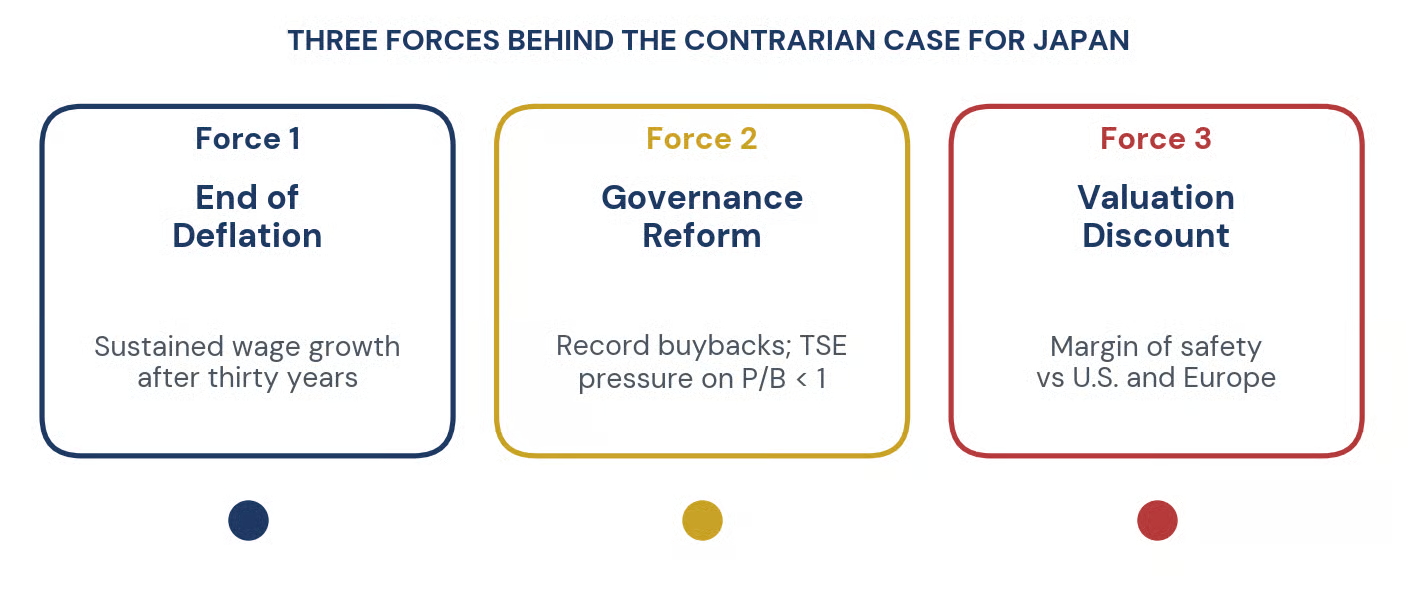 Figure 1. Three forces behind the contrarian case for Japan.
Global investors remain structurally underweight Japanese equities. This is not a new phenomenon. Japan has been underowned for decades. But the combination of three factors has created a valuation disconnect that we find increasingly difficult to ignore.
First, the end of deflation appears genuine. After thirty years of falling or stagnant prices, Japan is seeing sustained wage growth and modest inflation. This changes the nominal growth equation for corporate earnings in ways that equity markets have been slow to price.
Second, corporate governance reform is producing measurable results. Share buybacks are at record levels. Dividends are rising. Merger and acquisition activity is robust. The Tokyo Stock Exchange is pressuring companies with price-to-book ratios below one to address their capital efficiency.
Third, valuation multiples remain depressed relative to the United States and Europe. This does not guarantee a rebound, but it provides a margin of safety that is increasingly rare in global markets.
Morgan Stanley has noted that Japan's equity market still has “meaningful upside as governance reforms accelerate”. BlackRock, while recently shifting from overweight to neutral on Japan due to energy import concerns, continues to acknowledge the underlying strength of corporate balance sheets.
With that backdrop, here are the sectors where we believe the selling has been overdone.
Semiconductors and Advanced Electronics
This sector has been punished brutally. On any given day, you can see Tokyo Electron down 3 per cent, Advantest declining, Screen Holdings sliding. The market has treated Japanese semiconductor names as if they are interchangeable with US tech stocks, selling first and asking questions later.
We think this is a mistake.
Japanese semiconductor equipment and materials companies occupy a different position in the value chain than US software or chip design firms. Tokyo Electron, Disco, and Lasertec are enablers. They make the machines that make the chips. As long as the world needs more computing — and AI ensures that it will — these companies have pricing power that is distinct from consumer-facing technology.
The structural story remains intact. Under Prime Minister Takaichi, the Japanese government has identified semiconductors as a strategic national priority. The US-Japan investment partnership, with its USD 550 billion commitment, is already funnelling real capital into domestic production capacity. This is not speculation. This is industrial policy with a cheque book.
The recent weakness appears to be sentiment-driven rather than fundamental. We are watching for stabilisation in the relative strength of names like Tokyo Electron and Advantest as a potential entry signal.
Automation and Robotics
Japan has always been the dominant player in factory automation. Fanuc, Yaskawa Electric, and Keyence are global leaders in industrial robots, motion control, and factory sensors. These are not speculative growth stories. They are profitable, cash-generating businesses with decades of operating history.
Yet they have been sold off alongside the broader technology complex as if they were unprofitable software start-ups.
The demand driver here is not hype. It is demography. Japan's working-age population has been shrinking for years. The country has no choice but to automate. The same dynamic is now spreading to China, Europe, and North America, where labour shortages are becoming permanent.
DBS Bank has identified automation and robotics as one of four strategic sectors likely to benefit from direct government investment and regulatory support under the current administration. This is a tailwind that we do not believe is priced into current valuations.
We see the pullback in names like Yaskawa Electric and Fanuc as a potential opportunity to establish positions in businesses with structural demand, defensive moats, and valuations that have become reasonable.
The demand driver here is not hype. It is demography. Japan has no choice but to automate.
Trading Companies and Value Cyclicals
This is the most traditional value opportunity on our list. Japanese trading houses — Mitsubishi Corporation, Mitsui & Co, Itochu — were Warren Buffett's entry point into Japan for a reason. They are diversified conglomerates with exposure to energy, metals, food, and infrastructure. They generate substantial free cash flow. They are returning capital to shareholders through buybacks and dividends.
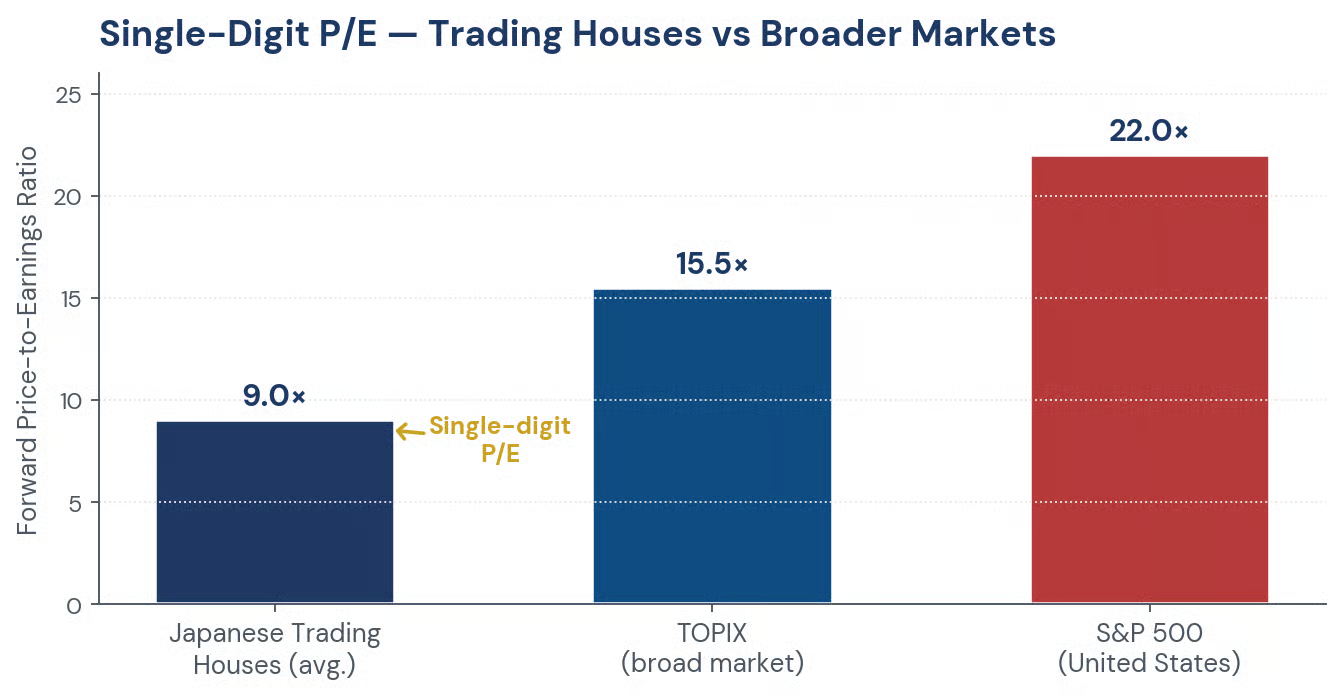 Figure 2. Trading houses trade at single-digit P/E — a meaningful discount to TOPIX and the S&P 500.
These names have been caught in the crossfire of two unrelated fears: the Iran war pushing oil prices higher, and the general risk-off sentiment that has affected all equities. But trading houses benefit from higher commodity prices in many of their business lines. The selling appears indiscriminate.
When we see high-quality, shareholder-friendly businesses trading at single-digit price-to-earnings ratios with dividend yields above 3 per cent, we pay attention. The recent weakness in names like Mitsubishi Corporation and Sumitomo Corporation has brought them into a range that we consider attractive for a contrarian entry.
UNDER THE RADAR Japanese trading houses are diversified, free-cash-flow generative conglomerates returning capital through record buybacks and dividends. Buffett's entry point remains the cleanest expression of the Japan value thesis.
What We Are Not Doing
It is important to be clear about what we are not doing.
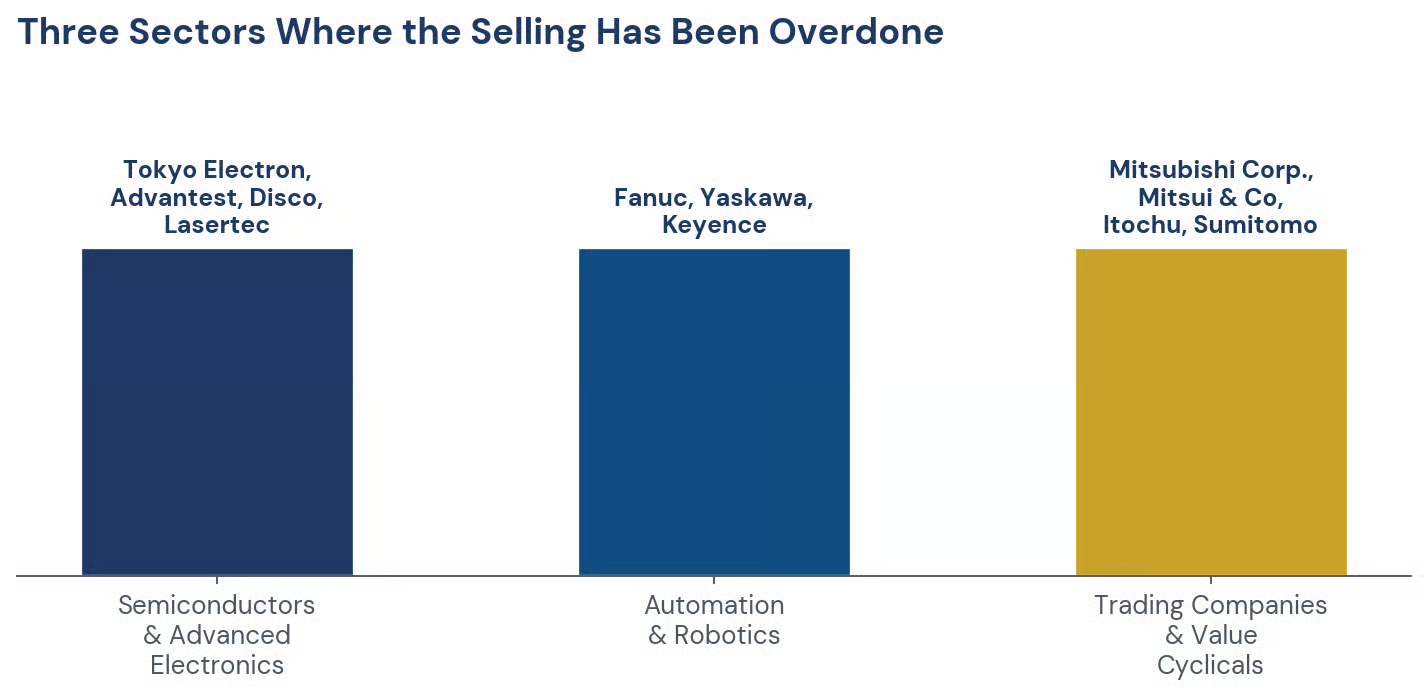 Figure 3. Three sectors where the selling has been overdone — our focus list.
We are not buying the entire Japanese market. The Nikkei 225 has shown significant volatility, with daily moves of 500 points or more becoming routine. Banking stocks, in particular, remain under pressure as expectations for Bank of Japan rate hikes fluctuate. We are avoiding sectors where the fundamental headwinds — energy import dependence, yen sensitivity, domestic consumption weakness — outweigh the valuation appeal.
We are also not making a macro bet on the yen. Currency forecasting is a fool's errand. Our interest in Japan is bottom-up and company-specific. We are looking for businesses with pricing power, strong balance sheets, and returns on capital that are durable regardless of whether the dollar trades at 150 yen or 170 yen.
The Risks We Are Monitoring
Two risks could derail this thesis.
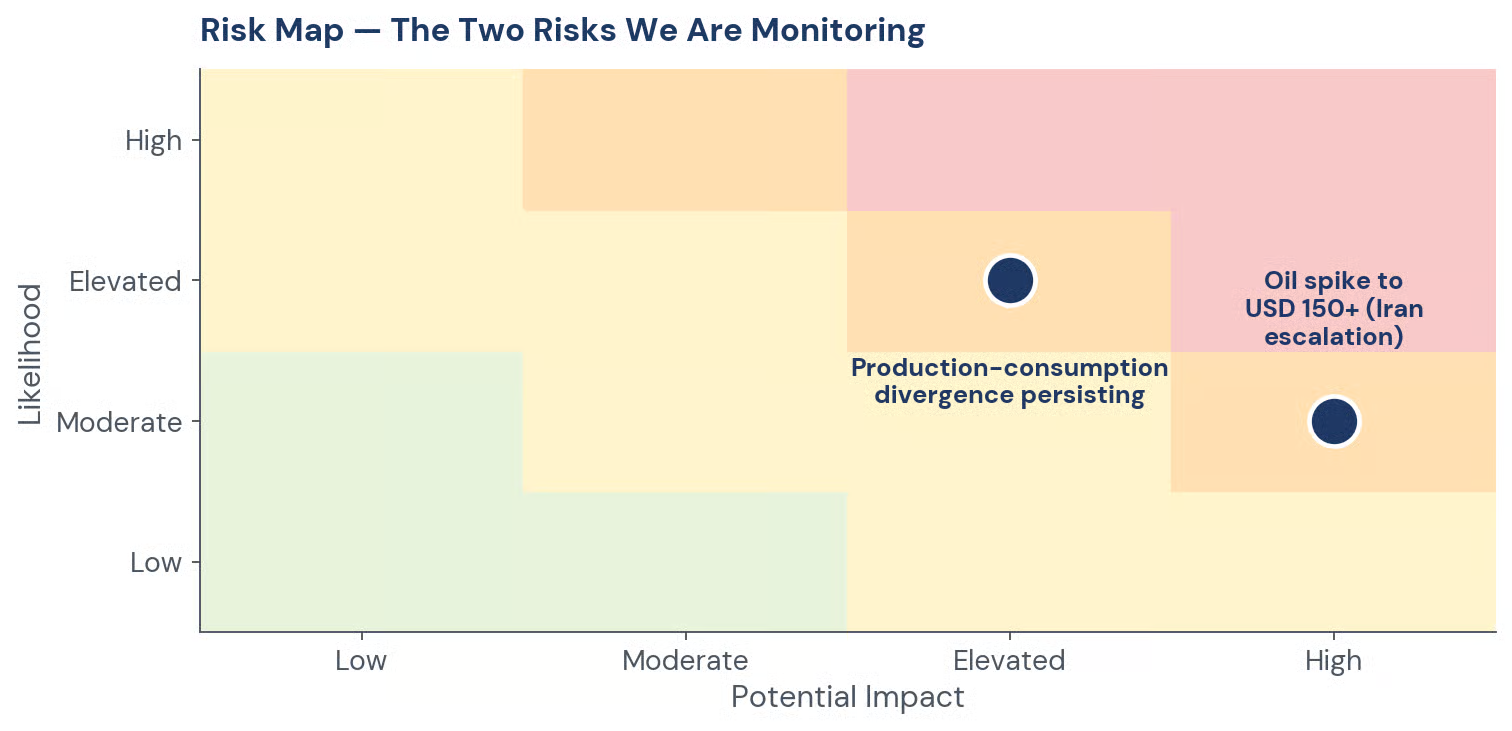 Figure 4. Risk map — likelihood versus potential impact of the two primary risks.
The first is energy prices. Japan imports virtually all of its oil and gas. If the Iran conflict escalates further and oil spikes to USD 150 or higher, the terms of trade deterioration will hit Japanese corporate earnings broadly. The Bank of Japan has already raised its core inflation forecast to 2.8 per cent for 2026, largely due to energy costs. This is a real risk, and it is why we are sizing positions conservatively.
The second is the divergence between retail sales and industrial production. March retail sales surged 1.7 per cent year on year, well above expectations, driven by automobiles and other goods. But manufacturing PMI fell to 51.6, and input prices rose at the fastest rate since August 2024. If the production side continues to weaken while consumption holds up, Japan could face a stagflationary dynamic that would be difficult for equities to digest.
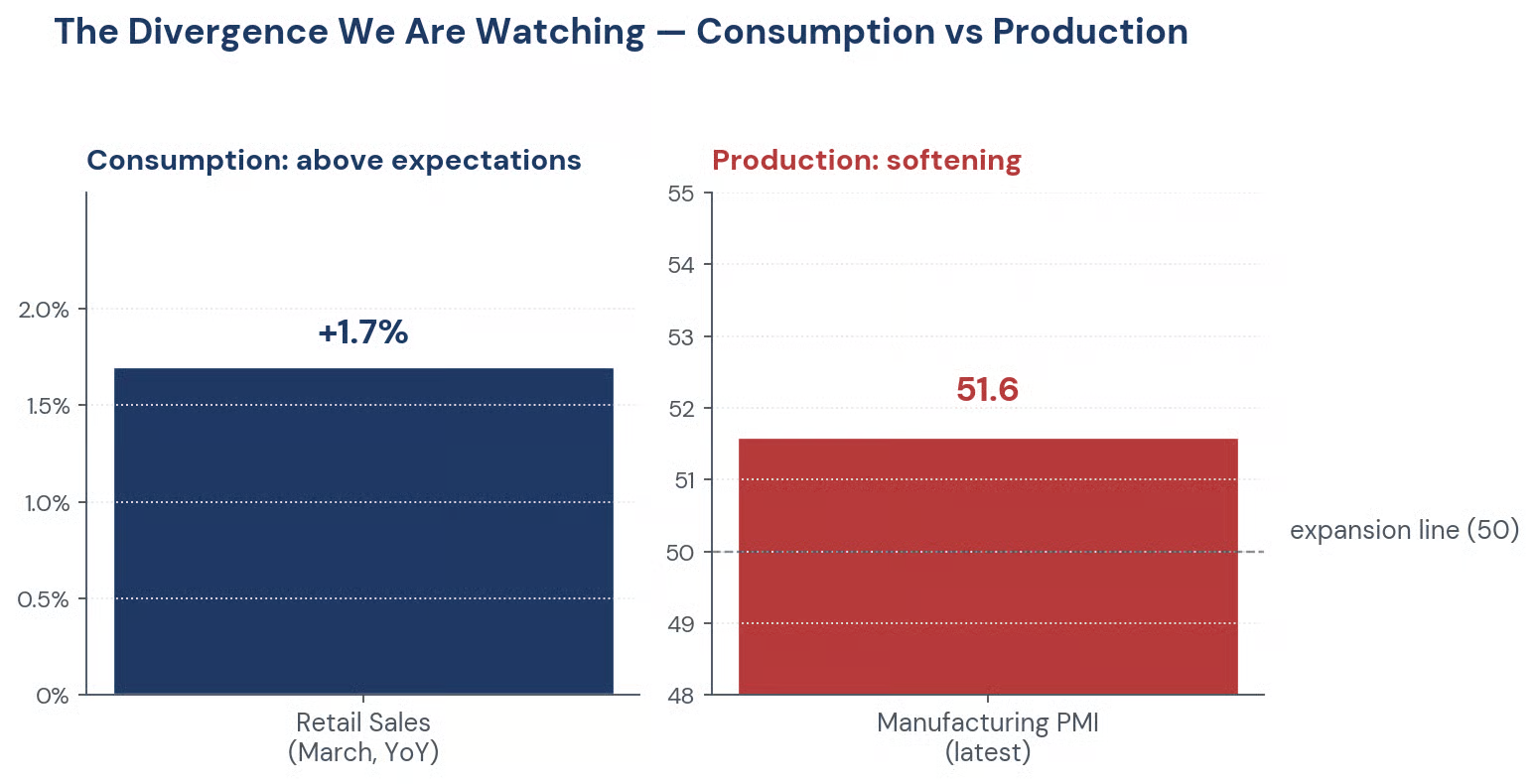 Figure 5. The divergence we are watching — consumption holding up while production softens.
We are watching manufacturing PMI and industrial production data closely for signs of stabilisation. A continued decline would cause us to reconsider the timing of any additions.
Our Current Stance
We have begun to scale into modest positions in Japanese semiconductors, automation, and select trading companies. The size is small — these are exploratory positions, not convictions. We are treating this as a high-conviction watch rather than a full allocation.
The technical signals we use — our 25/50 moving average crossovers and our proprietary breadth indicators — have not yet triggered a broad “all clear” for Japan. But they are flashing amber rather than red. A handful of names in these three sectors have begun to show relative strength against the TOPIX, which is often the first sign that institutional money is bottom-fishing.
If the current weakness persists into May and June without a fundamental deterioration in corporate earnings, we will likely increase our exposure gradually. If the technical picture improves and we see a confirmed 25/50 golden cross on the broader Japanese indices, we will become more aggressive.
The margin of safety in Japanese value stocks is as wide as it has been in years. But margin of safety only matters if the business survives.
For now, we are watching, waiting, and selectively adding. The margin of safety in Japanese value stocks is as wide as it has been in years. But margin of safety only matters if the business survives. We are focused on companies that will.
DISCLAIMER This newsletter is published for informational and educational purposes only. Nothing contained herein constitutes investment advice, a solicitation, or a recommendation to buy or sell any financial instrument. Past commentary does not guarantee future results. Please consult a licensed financial advisor before making any investment decisions. |