Macro · China
The Phoenix and the Dragon
How Policy-Driven Innovation Is Reshaping the CSI 300
Bull, Bear, Bust · 11 March 2026 · 18 min read

For years, global investors treated China as a market to be tolerated rather than embraced. The narrative was familiar: property bubbles, state intervention, opaque governance, and an economy perpetually on the verge of a hard landing. That story, like so many consensus views, is now dangerously outdated.
KEY POINTS
▸ China has shifted policy focus from supply-side technology to demand-side domestic circulation, with a flexible GDP target range of 4.5–5%. ▸ The “AI+” policy mandate is now operational, with explicit directives for AI Agents across all industries and a clear dual-tier industrial policy framework. ▸ Valuations are compelling: the CSI 300 trades at ~13× forward earnings — well below the U.S. and Japan — with EPS growth accelerating from 4% in 2025 to 14% in 2026–2027. ▸ Expected consolidation range 4,500–4,800 over coming months, then an earnings-driven breakout to 5,000–5,200 by late 2026. ▸ Base-case target for the CSI 300 is 5,500–5,800 by mid-2027 — approximately 18–25% upside from current levels. ▸ Risks are real but manageable: property contraction, trade tensions, slower consumption recovery, and reform fatigue. ▸ Positioning: moderate overweight to Chinese equities, favouring Information Technology, Financials, and Industrials as primary beneficiaries of the policy pivot. ▸ Prepared to add significantly on weakness — the structural story is intact; the only question is price. A quick-read snapshot of this newsletter's commentary |
For years, global investors treated China as a market to be tolerated rather than embraced. The narrative was familiar: property bubbles, state intervention, opaque governance, and an economy perpetually on the verge of a hard landing. That story, like so many consensus views, is now dangerously outdated.
We are witnessing something remarkable in Chinese equity markets. The CSI 300 — the benchmark index of the largest and most liquid A‑shares listed in Shanghai and Shenzhen — has begun a structural transformation that we believe will reward patient, disciplined investors over the next several years. This is not a speculative rebound. This is a policy‑driven, earnings‑supported re‑rating of an entire asset class.
What follows is our complete roadmap for the CSI 300 over the next twelve to eighteen months. We will explain the policy shifts that matter, the valuation case that few are discussing, the technical signals we are monitoring, and exactly how we are positioning our fund to capture what we believe is a multi‑year opportunity.
Part One — The Three Engines Driving China's Market Transformation
Before we talk about price targets, we need to understand why the investment case for China has fundamentally changed. Three structural engines are now working in concert.
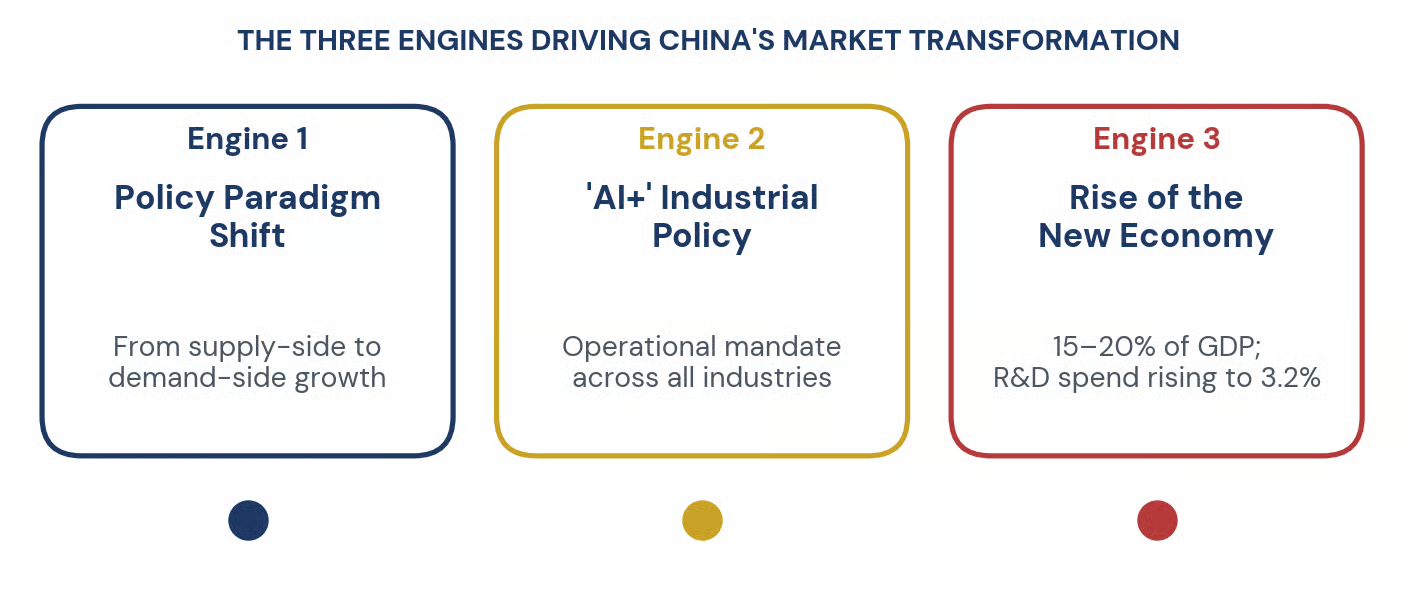 Figure 1. Three structural engines now working in concert.
Engine One: The Policy Paradigm Shift from Supply to Demand
The 2026 Two Sessions — China’s annual legislative gathering — marked a decisive turning point. For the first time in years, the policy focus has shifted from supply‑side, technology‑driven initiatives toward demand‑side, domestic circulation‑led growth. This is not a subtle nuance. It is a fundamental reorientation.
The GDP growth target was set at a range of 4.5 to 5 percent, shifting from a single number to a flexible range that prioritises quality over speed. The fiscal deficit ratio has been maintained at approximately 4 percent for the second consecutive year — a historically high level that was previously reserved for emergency stimulus. General public budget expenditure has surpassed 30 trillion renminbi for the first time.
But the most important signal came from the monetary side. The People’s Bank of China has explicitly upgraded its policy language from “timely reserve requirement ratio and interest rate cuts” to “flexible and efficient use of multiple policy tools”. This is not semantic. It means that rate cuts and reserve requirement reductions have moved from conditional tools to active deployment instruments. The certainty of policy easing has risen significantly.
In January 2026, the PBOC announced cuts to sector‑specific interest rates by 25 basis points, expanded its re‑lending programme for tech innovation by 400 billion renminbi to 1.2 trillion renminbi, and established a separate 1 trillion renminbi relending facility to support small and medium‑sized private firms. Deputy Governor Zou Lan confirmed that there remains room for further cuts to interest rates and reserve requirement ratios through the year.
Engine Two: The “AI+” Industrial Policy
From Directional Statements to Itemised Implementation
This is the most operationally significant development for investors. The term “AI+” has been written into the Government Work Report for the first time as an independent economic concept, with explicit directives for AI Agents to be deployed across all industries.
The industrial policy architecture has also become clearer in its tiered design. Emerging pillar industries — those with near‑term commercial monetisation capability — include integrated circuits, aerospace, biopharmaceuticals, the low‑altitude economy, new energy vehicles, and advanced equipment. Future industries — those with longer‑term strategic development potential — include brain‑computer interfaces, quantum technology, embodied intelligence, 6G, and future energy.
Information technology is uniquely positioned as the only sector spanning both tiers. This means that policy support is set to extend across the entire 15th Five‑Year Plan cycle (2026‑2030), providing both near‑term earnings certainty and long‑term option value.
Engine Three: The Rise of the “New Economy”
We estimate that innovation‑driven “new economy” sectors now account for 15 to 20 percent of China’s GDP and contributed approximately one‑quarter of GDP growth during the 2020‑2024 period. This rapid rise has helped offset the significant growth drag from the property downturn.
China has vowed to continue boosting innovation, raising research and development spending as a share of GDP from 2.7 percent in 2024 to over 3.2 percent by 2030. With sustained investment and strong R&D spending, we expect the “new economy” sectors to continue growing faster than the rest of the economy, leading to a three percentage point higher share of GDP by the end of the decade.
This is not a speculative rebound. This is a policy-driven, earnings-supported re-rating of an entire asset class.
Part Two — Where the CSI 300 Stands Today
Valuations, Technicals, and Sentiment
Now let us move from the structural story to the current market reality. As of early April 2026, the CSI 300 is trading near 4,643 points, having delivered a strong 2025 performance that surprised many global allocators.
Valuations: The Most Compelling Story in Global Equities
This is where the case for China becomes genuinely compelling. The CSI 300 currently trades at approximately 13 times forward price‑to‑earnings for 2026, well below peers like the United States and Japan. The Shiller CAPE ratio — which averages inflation‑adjusted earnings over ten years — implies a long‑term expected return of approximately 6.5 percent. The Shiller Excess CAPE Yield, which measures the additional return from equities over risk‑free government bonds, stands at 5.08 percent, which is well within its typical historical range and suggests that equities remain attractive relative to bonds.
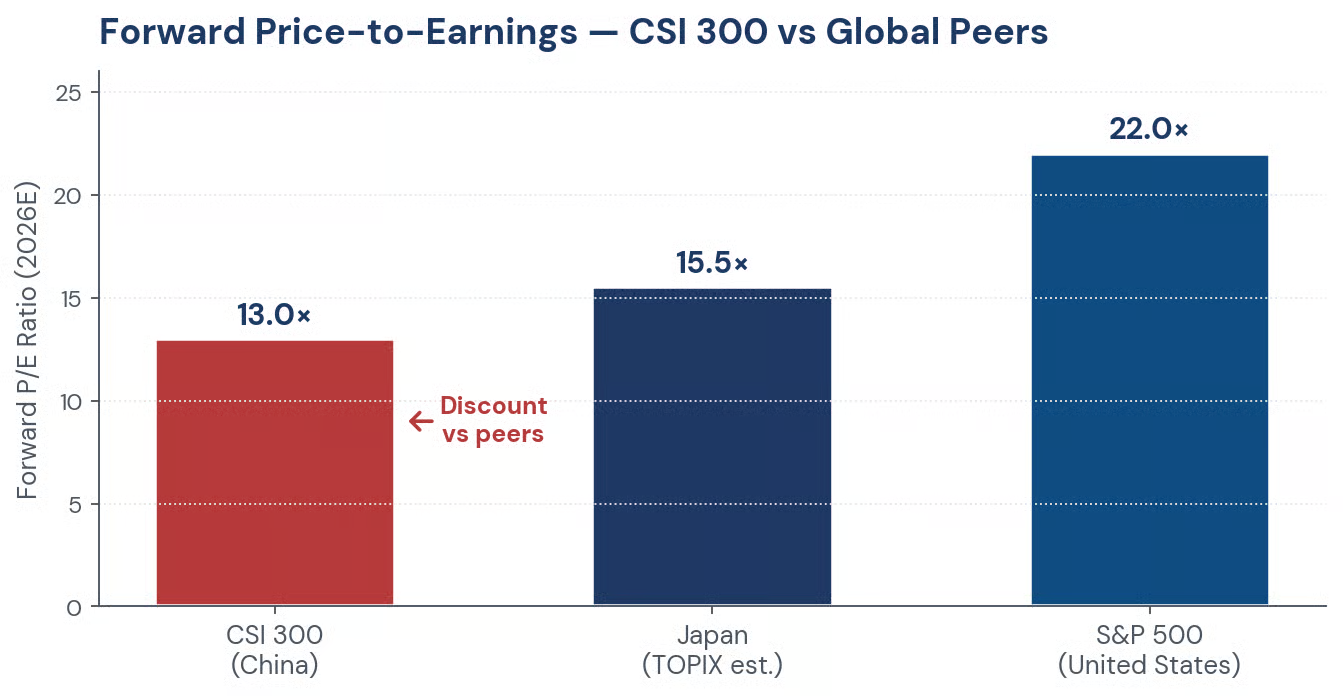 Figure 2. Forward P/E (2026E): the CSI 300 trades at a meaningful discount to global peers.
But the most important valuation metric is the earnings trajectory. Goldman Sachs expects earnings growth to accelerate to approximately 14 percent in 2026‑2027, a notable improvement from an estimated 4 percent in 2025, supported by a mix of AI‑related productivity gains and policy measures. FSMOne projects earnings per share growth accelerating from 9 percent in 2026 to 12 percent in 2027.
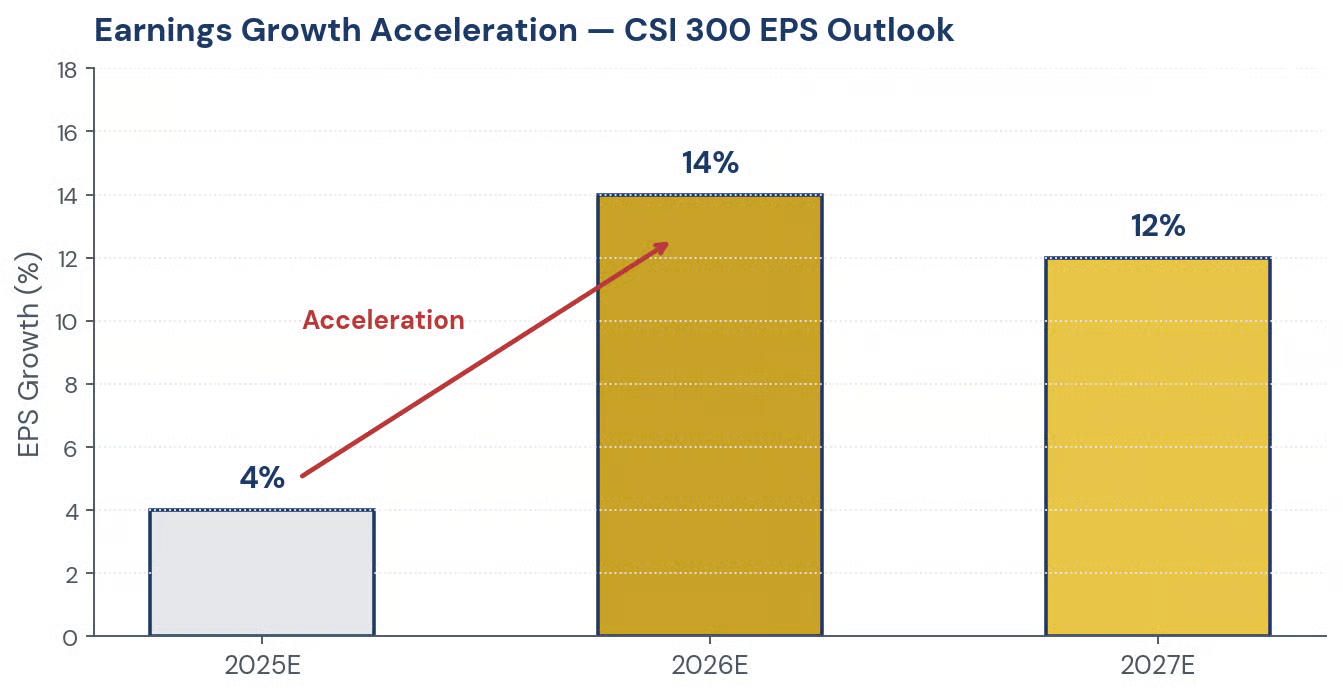 Figure 3. EPS growth outlook — acceleration from 2025 into 2026–2027.
Based on a fair price‑to‑earnings multiple of 15 times, FSMOne’s 2028 target level for the CSI 300 is 6,285 points, implying approximately 36 percent upside over a three‑year horizon. Goldman Sachs is more conservative, targeting 5,200 by the end of 2026, representing approximately 12 percent upside from current levels. We find both targets plausible depending on the pace of earnings delivery.
Technical Picture: A Market Consolidating Before the Next Leg Higher
The technical indicators on the CSI 300 are sending a mixed message that we interpret as a healthy consolidation rather than a breakdown.
The current trading range is 4,606 to 4,678 points, with the index sitting below its 50‑day moving average of approximately 4,678 and its 200‑day moving average of approximately 4,699. The Relative Strength Index stands at 45.4, which is neutral territory — neither oversold nor overbought. The Moving Average Convergence Divergence indicator is bearish, with a reading of negative 6.45.
The summary of moving averages shows twelve sell signals and zero buy signals, which sounds alarming until you understand the context. The CSI 300 is in a consolidation phase after a strong 2025 rally. It is pausing, not rolling over. The longer‑term trend — defined by the 200‑day moving average — remains intact, with the index trading only modestly below that level.
Our interpretation is straightforward. The CSI 300 is catching its breath. The technical weakness is a function of consolidation, not deterioration. We view the current levels as an attractive entry point for patient capital.
UNDER THE RADAR The anti-involution policy — a supply-side consolidation drive across heavy industry — remains underappreciated by global investors. History suggests this kind of policy-guided consolidation can generate sustained pricing power for industry leaders.
The Anti‑Involution Policy: An Underappreciated Catalyst
One of the most important policy themes from the 2026 Two Sessions has received surprisingly little attention from global investors. Policymakers have explicitly called for an accelerated exit of inefficient capacity through administrative means including environmental standards enforcement, capacity regulation, and price oversight.
This “anti‑involution” policy — a direct response to the destructive price wars and overcapacity that have plagued Chinese industries — is essentially a new round of supply‑side structural consolidation. History suggests that this type of policy‑guided consolidation can be highly effective. The 2016 supply‑side reform in sectors like steel and coal led to a sustained recovery in pricing power and profit margins for industry leaders.
The materials sector, in particular, is an underappreciated beneficiary of this policy. While most investors focus on technology and consumer names, the supply‑side consolidation in basic industries could generate significant earnings surprises over the next two years.
Part Three — Our CSI 300 Roadmap: Four Phases Over 12 to 18 Months
Now we arrive at the core of our analysis. Based on the weight of evidence — the policy shifts, the earnings trajectory, the valuation picture, and the technical signals — we have constructed a four‑phase roadmap for the CSI 300.
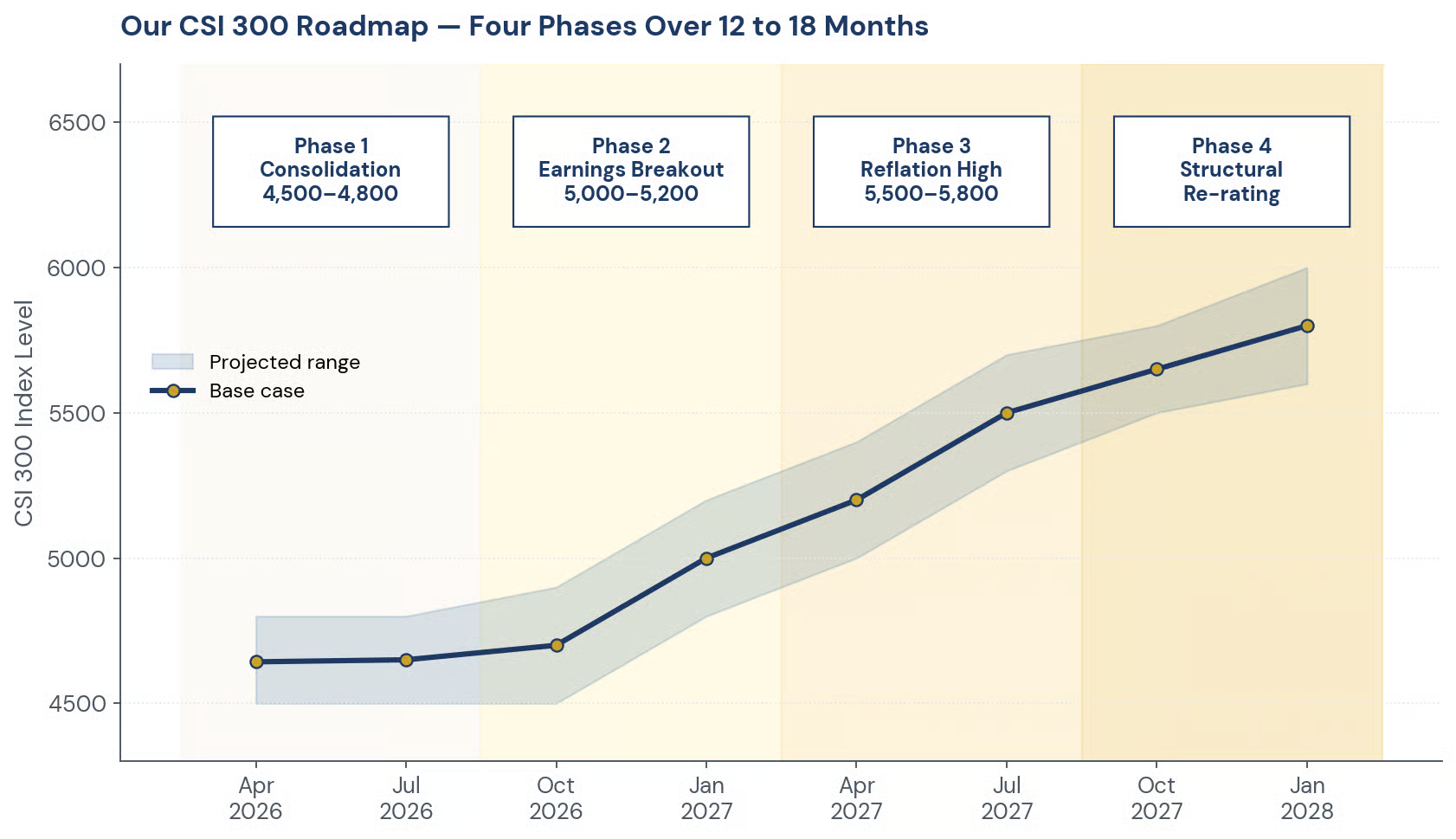 Figure 4. Four-phase roadmap — consolidation, breakout, reflation high, structural re-rating.
Phase One: The Consolidation Range (Current — Mid‑2026)
We expect the CSI 300 to remain in a consolidation range between 4,500 and 4,800 points over the coming months. This is not a decline. It is a pause.
Why consolidation? Three reasons. First, the market is digesting the strong 2025 gains and awaiting confirmation that earnings delivery will match policy promises. Second, the property market adjustment — while smaller than previous years — continues to be a drag, with expected declines of 5 to 10 percent in 2026. Third, external uncertainties related to United States trade and technology policies are keeping some global allocators on the sidelines.
However, we emphasise that this is a consolidation, not a reversal. The policy backdrop is supportive, valuations are attractive, and earnings expectations are improving. The downside from current levels is limited.
Phase Two: The Earnings‑Driven Breakout (Late 2026)
The catalyst for the next leg higher will be earnings. As the first half 2026 reporting season unfolds, we expect to see evidence that the policy stimulus and AI investment cycle are translating into profit growth.
The most exposed sectors to this earnings acceleration are information technology, financials, and industrials. Technology benefits directly from the “AI+” policy mandate and the semiconductor self‑sufficiency drive. Financials benefit from the proactive easing cycle and capital market reforms, including the imminent launch of ChiNext reforms and the first‑ever inclusion of private equity exit channels in the Government Work Report. Industrials benefit from the “anti‑involution” supply‑side consolidation and the explicit designation of aerospace and the low‑altitude economy as emerging pillar industries.
We expect the CSI 300 to break above 4,800 and trade into the 5,000 to 5,200 range by late 2026, supported by improving earnings and increasing foreign investor participation. This is broadly consistent with Goldman Sachs’s year‑end 2026 target of 5,200.
Phase Three: The Reflation High (First Half 2027)
By early 2027, several factors should align. The property market drag will have narrowed further, with expected declines of only 0 to 5 percent. Consumer confidence, supported by the fiscal stimulus and stabilising employment, should begin to recover. The Asian Development Bank expects consumption growth to pick up in 2027 as social welfare spending and demand‑side measures restore household confidence.
The inflation picture will also be improving. The Asian Development Bank projects inflation rising from approximately zero percent in 2025 to 0.6 percent in 2026 and 1 percent in 2027. While still low by Western standards, this represents a meaningful recovery from deflationary pressures and supports pricing power for consumer goods and materials companies.
Our base case target for the CSI 300 by mid‑2027 is 5,500 to 5,800 points. This represents approximately 18 to 25 percent upside from current levels and would bring the index back toward its 2021 highs.
Phase Four: The Structural Re‑rating (Second Half 2027 and Beyond)
Looking beyond our 18‑month horizon, the case for China becomes even more compelling. The 15th Five‑Year Plan explicitly names boosting consumption as a top task — the first time consumption has been elevated to this priority level. The anti‑involution campaign is being incorporated into building a “unified national market,” which should reduce local protectionism and improve national economic efficiency.
UBS estimates that the “new economy” sectors could increase their share of GDP by three percentage points by 2030, continuing to offset the property drag and drive overall growth. Faster artificial intelligence development and adoption could generate additional technology exports, stronger capital expenditure, and larger productivity gains — all of which would flow through to corporate earnings and equity valuations.
We are not calling for a return to the double‑digit growth rates of China’s earlier era. That would be unrealistic. But we are calling for a sustained, multi‑year re‑rating of Chinese equities as the market transitions from a property‑led, debt‑driven past to a consumption‑led, innovation‑driven future.
Part Four — Risks That Could Derail the Roadmap
No forecast is complete without an honest discussion of what could go wrong. We see four primary risks to our CSI 300 outlook.
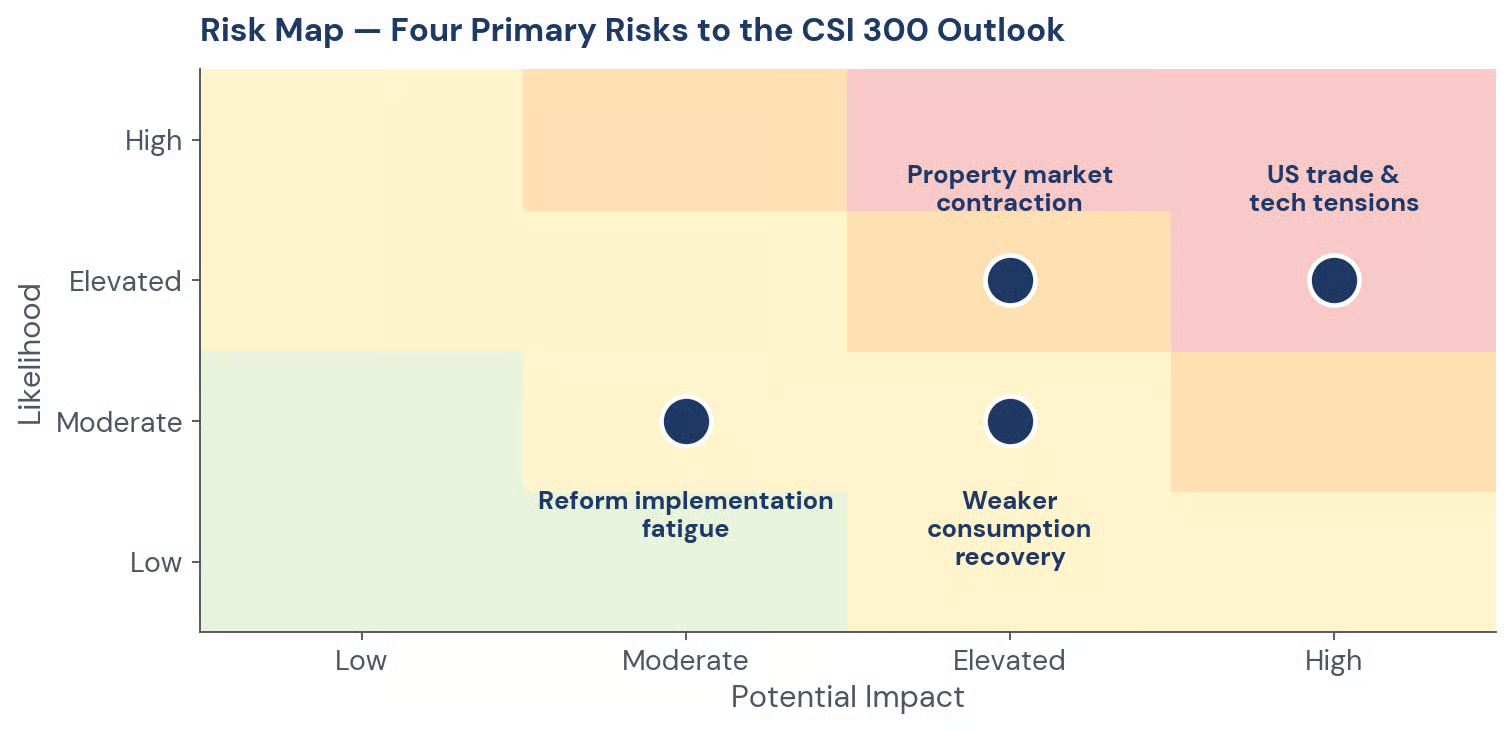 Figure 5. Risk map — likelihood versus potential impact of the four primary risks.
Risk One: A Deeper‑Than‑Expected Property Market Contraction
While the property downturn is narrowing, it is not over. UBS expects property sales, new starts, and investment to decline by 5 to 10 percent in 2026 and 0 to 5 percent in 2027. The overall drag on GDP growth may narrow to 0.5 to one percentage point in 2026, but a sharper contraction — perhaps triggered by a major developer default — could undermine confidence and cap the valuation re‑rating.
Risk Two: Escalating United States Trade and Technology Tensions
The external environment remains uncertain. The United States has signalled its intention to maintain pressure on Chinese technology sectors, and a flare‑up in trade tensions could weigh on export‑oriented industries. The Asian Development Bank notes that if Middle Eastern conflicts persist for a full year, the Asia‑Pacific region’s economic growth could be reduced by approximately 1.3 percentage points over 2026 and 2027 combined. A similar dynamic applies to United States‑China trade shocks.
Risk Three: A Weaker‑Than‑Expected Consumption Recovery
The policy pivot toward demand‑side stimulus is welcome, but it takes time to translate into household spending. If consumers remain cautious — still scarred by the property downturn and concerned about employment prospects — the domestic consumption engine may fail to fire as quickly as expected. This would weigh on the many CSI 300 companies that depend on domestic demand.
Risk Four: Reform Implementation Fatigue
The corporate governance and capital market reforms have delivered impressive early results, but they require sustained effort. If the pace of reform slows — or if state‑owned enterprises resist pressure to improve returns on equity and shareholder distributions — the valuation re‑rating could stall. We will be watching the percentage of companies with price‑to‑book ratios above one and the trajectory of share buybacks as our key metrics.
Part Five — Our Tactical Playbook for the CSI 300
Given this roadmap, here is exactly how we are positioning our fund.
Current Positioning (Consolidation Phase)
We are maintaining a moderate overweight to Chinese equities, with approximately 12 to 18 percent of our global equity allocation dedicated to the CSI 300 and related A‑share exposures. Within that allocation, we are favouring three sectors.
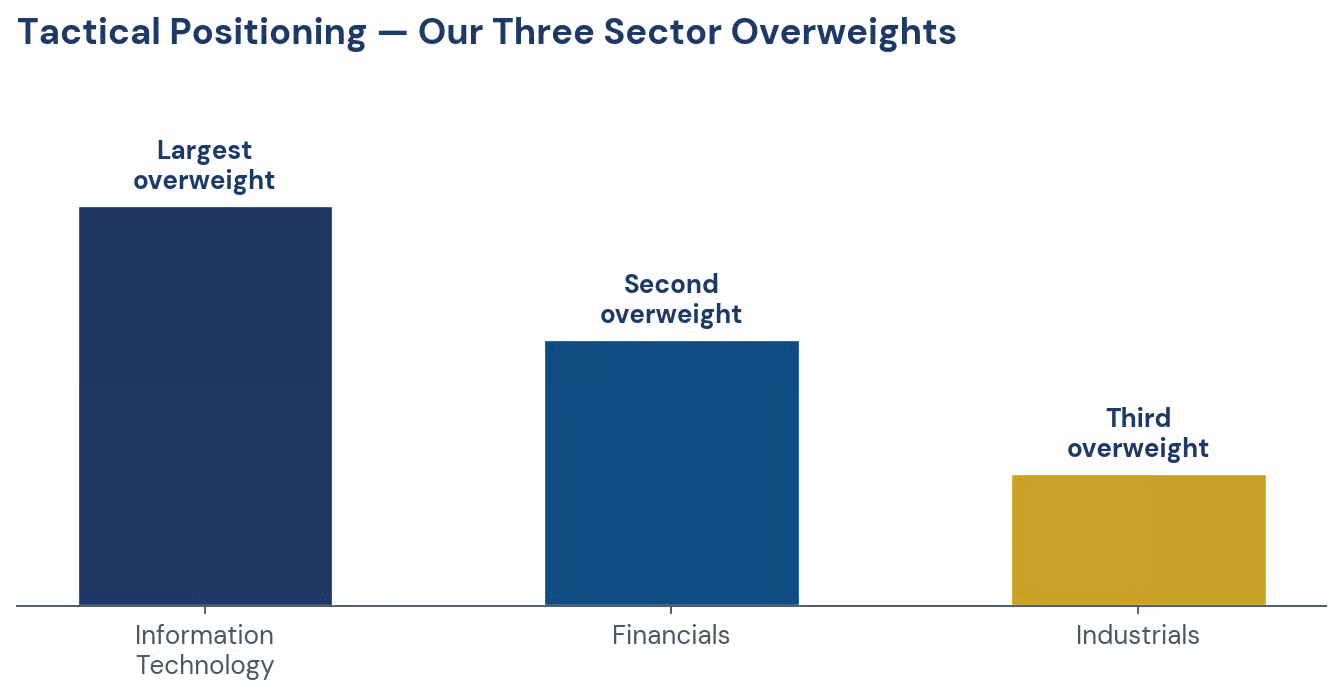 Figure 6. Our tactical positioning — three sector overweights.
Information technology is our largest overweight. This sector has the highest policy density from the Two Sessions, spanning both the emerging and future industries tiers. The explicit “AI+” mandate and the expansion of the tech innovation re‑lending programme by 400 billion renminbi provide both a policy tailwind and a funding backstop.
Financials are our second overweight. The proactive easing cycle, while pressuring net interest margins in the near term, is being offset by guided deposit rate reductions. More importantly, the acceleration in capital market reform — including the ChiNext reforms and the national‑level merger and acquisition fund — systematically improves the operating environment for investment banking and asset management businesses.
Industrials are our third overweight. The “anti‑involution” supply‑side consolidation should benefit industry leaders in sectors like advanced equipment and aerospace. The explicit designation of the low‑altitude economy as an emerging pillar industry provides an independent policy catalyst for the high‑end manufacturing direction within industrials.
Opportunistic Buying Zone (Below 4,500 on the CSI 300)
If the CSI 300 falls below 4,500 — which would represent a roughly three to four percent decline from current levels — we will become aggressive buyers. This level would bring valuations to approximately 12.5 times forward earnings, which we consider deeply attractive given the earnings growth acceleration to 14 percent.
We have a watch list of thirty high‑quality Chinese companies — technology leaders, consumer franchises, and financial institutions with strong dividend histories — that we will purchase in size at these levels. Our preferred vehicle for core exposure is the Huatai‑PineBridge CSI 300 ETF, which systematically captures policy winners in a diversified manner while providing a valuation buffer.
Full Deployment (Below 4,200 on the CSI 300)
A decline below 4,200 would require a genuine shock — perhaps an escalation in trade tensions or a property sector event. In that scenario, we would deploy substantially all of our China cash reserves. We view a CSI 300 below 4,200 as a gift, not a crisis. The structural story of policy support, earnings acceleration, and innovation‑driven growth does not change because of a market panic. It simply becomes cheaper.
Profit‑Taking Levels (Above 5,800 on the CSI 300)
We will begin taking partial profits when the CSI 300 approaches 5,800, which is the upper end of our base case 2027 target. We will trim our most extended positions — particularly those that have re‑rated to price‑to‑earnings multiples above 20 times — and rotate the proceeds into laggards within the Chinese market or into other international markets that offer better value.
Part Six — Probabilities, Not Predictions
As with our United States and Japan strategies, we assign probabilities to outcomes rather than pretending to predict the future.
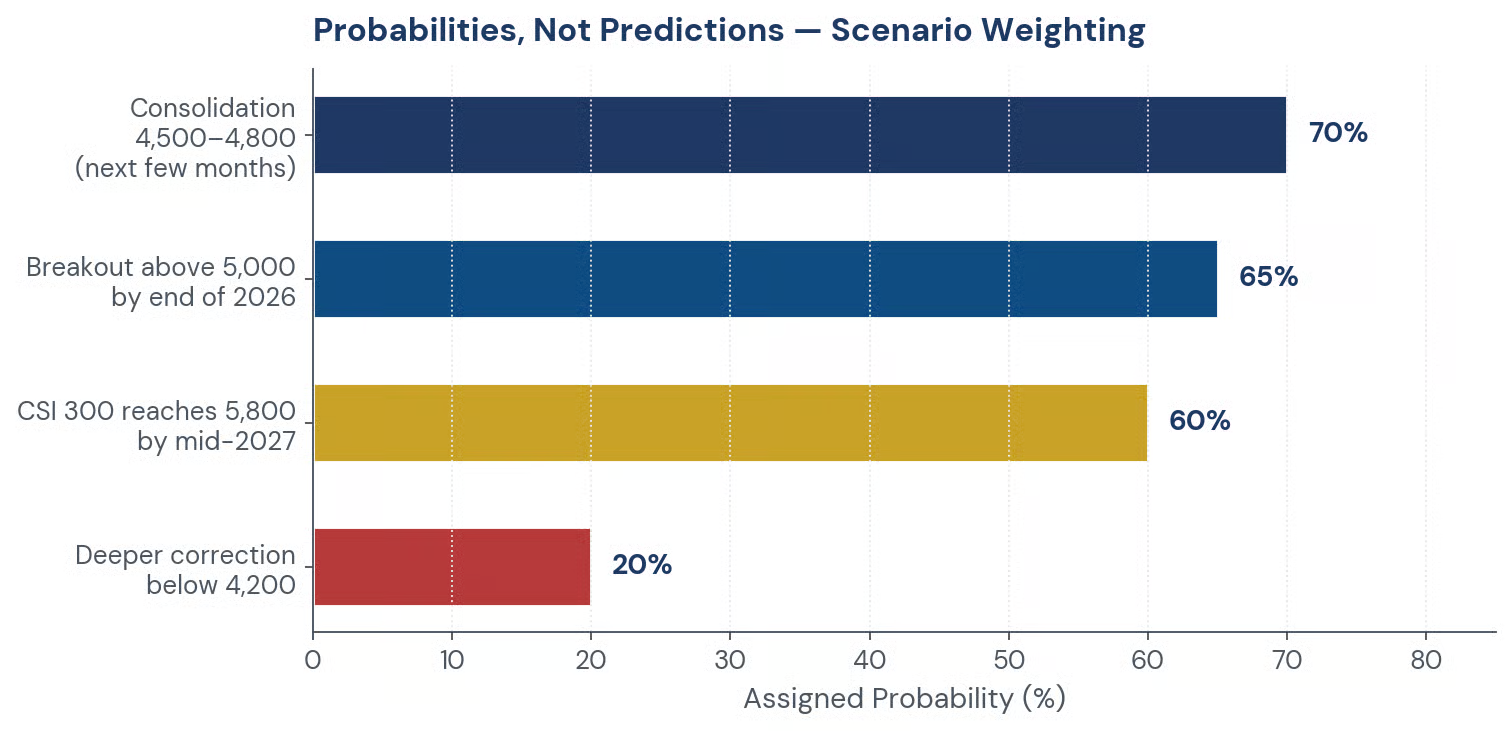 Figure 7. Scenario probabilities — our central expectations, not predictions.
A continued consolidation between 4,500 and 4,800 over the coming months: we assign a 70 percent probability. This is our base case, and we are positioned to add on weakness.
A breakout above 5,000 by the end of 2026: we assign a 65 percent probability. This depends on earnings delivery meeting expectations and policy implementation proceeding as signalled.
A deeper correction below 4,200: we assign a 20 percent probability. This would require a genuine shock. Our cash reserves protect us.
The CSI 300 reaching 5,800 by mid‑2027: we assign a 60 percent probability. This is our central expectation, but it depends on the consumption recovery gaining traction and external trade tensions remaining contained.
Part Seven — The Behavioural Trap: Why Global Investors Underown China
Before we close, we must address the elephant in the room. Global investors dramatically underweight China relative to its economic weight and its equity market size. The reasons are almost entirely behavioural.
Recency bias is the primary culprit. For the past several years, China disappointed. The property crisis, the regulatory crackdowns, the zero‑Covid hangover — each created a painful memory. The brain remembers pain more vividly than gain, so most investors simply wrote China off.
Confirmation bias reinforces the error. When a China skeptic sees a headline about property distress or trade tensions, they say, “See, nothing has changed.” They ignore the wage growth, the AI policy mandate, the semiconductor build‑out, the anti‑involution supply‑side consolidation, and the pivot toward consumption.
Herding behaviour completes the trap. No portfolio manager has ever been fired for underweighting China. It is the consensus position. But consensus is precisely where alpha is not.
We are not making that mistake. The weight of evidence tells us that China has genuinely changed.
The CSI 300 is not the index of 2021. It is not even the index of 2023. It is a market in the midst of a structural re‑rating, supported by policy, backed by earnings, and priced at a significant discount to its global peers.
The Bottom Line — A Summary for the Busy Reader
If you remember nothing else from this newsletter, remember these eight points.
First, China has shifted its policy focus from supply‑side technology to demand‑side domestic circulation, with a flexible GDP target range of 4.5 to 5 percent.
Second, the “AI+” policy mandate is now operational, with explicit directives for AI Agents across all industries and a clear dual‑tier industrial policy framework.
Third, valuations are compelling. The CSI 300 trades at approximately 13 times forward earnings, well below United States and Japan, with earnings growth accelerating from 4 percent in 2025 to 14 percent in 2026‑2027.
Fourth, we expect a consolidation range between 4,500 and 4,800 over the coming months, followed by an earnings‑driven breakout to 5,000‑5,200 by late 2026.
Fifth, our base case target for the CSI 300 is 5,500 to 5,800 by mid‑2027, representing approximately 18 to 25 percent upside from current levels.
Sixth, the risks are real but manageable: property market contraction, trade tensions, consumption recovery delays, and reform fatigue.
Seventh, we are positioned with a moderate overweight to Chinese equities, favouring information technology, financials, and industrials as the primary beneficiaries of the policy pivot.
Eighth, and most important, we are prepared to add significantly on weakness. The structural story is intact. The only question is price.
Thank you for reading. We will continue to monitor the weight of evidence in China and adjust our positioning accordingly. As always, we welcome your questions and your scepticism. In this business, blind faith is the enemy. Clear thinking is the only ally.
DISCLAIMER This newsletter is published for informational and educational purposes only. Nothing contained herein constitutes investment advice, a solicitation, or a recommendation to buy or sell any financial instrument. Past commentary does not guarantee future results. Please consult a licensed financial advisor before making any investment decisions. |