Macro · Japan
The Rising Sun
How Japan’s Historic Transformation Is Reshaping the Nikkei 225
Bull, Bear, Bust · 16 March 2026 · 15 min read

Just when many global investors had written off Japan as a deflationary relic, the world’s third‑largest economy has done something remarkable: it has woken up. For three decades, Japan was the land of falling prices, aging demographics, and a stock market that could not escape the shadow of its 1989 peak. That story is now dead. In its place, we are witnessing a structural transformation driven by three powerful engines: the end of deflation, the most aggressive corporate governance reforms in a generation, and a decisive shift in Japan’s geopolitical posture.
KEY POINTS
▸ Japan has exited three decades of deflation. Wages are rising, inflation is stable, and the Bank of Japan is normalising policy. ▸ Corporate governance reforms are working. Price-to-book ratios and returns on equity are improving, and the Tokyo Stock Exchange is serious about quality. ▸ Prime Minister Takaichi has a historic mandate for fiscal stimulus, defence build-out, and technological nationalism. ▸ Valuations are reasonable: the Nikkei is not cheap, but it is dramatically cheaper than the United States. ▸ We expect a shallow pullback to 48,000–49,000 in the coming months, followed by an earnings-driven recovery. ▸ Risks are real but manageable: faster BoJ tightening, a sharp yen reversal, China conflict, reform fatigue. ▸ Positioned to add on weakness — the structural story is intact; the only question is price. A quick-read snapshot of this month's investment case -Base-case target for the Nikkei is 58,500 by the end of 2027 — approximately 15% upside. |
We have spent months studying the weight of evidence on Japan — the monetary policy normalisation, the earnings trajectory, the technical signals, the election outcomes, and the valuation picture. What follows is our complete roadmap for the Nikkei 225 over the next twelve to eighteen months. We will tell you where we think the index is heading, why a pullback may be imminent, and exactly how we are positioning our fund to capture what we believe is a multi‑year structural upswing.
The Three Engines Driving Japan’s Transformation
Before we talk about price targets or technical indicators, we need to understand why Japan is no longer the market it was five years ago. Three structural shifts have fundamentally altered the investment case.
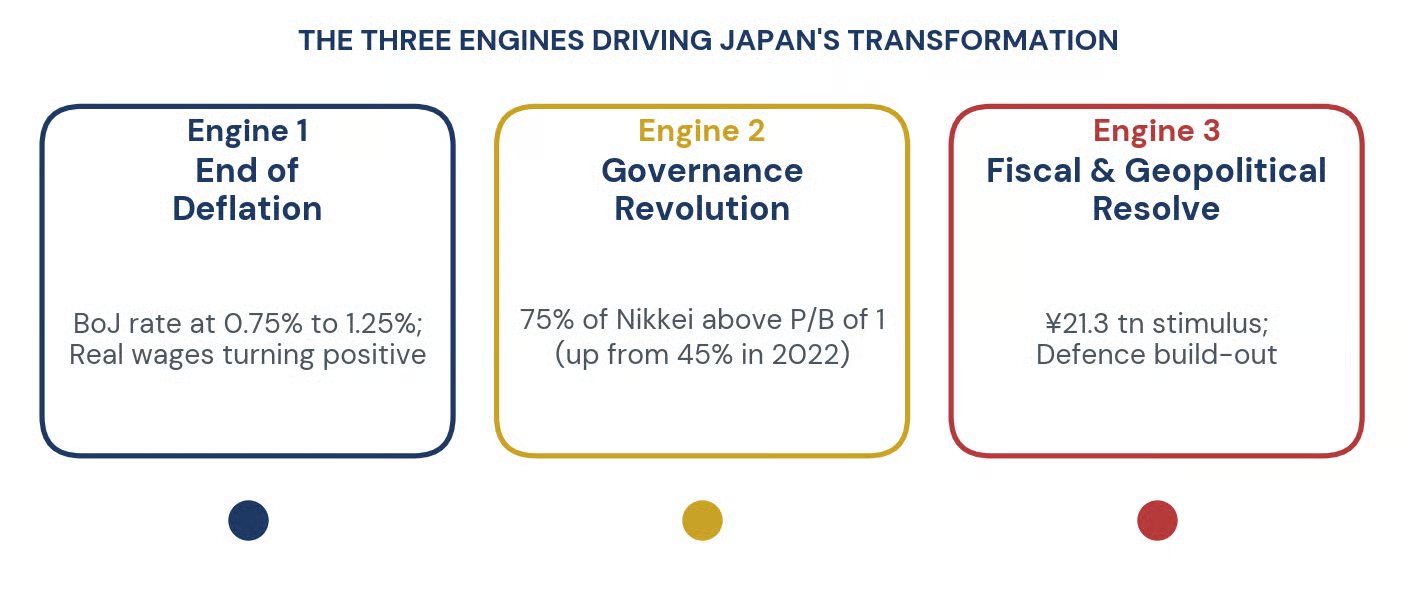 Figure 1. Three structural engines reshaping Japan.
Engine One: The End of Deflation
For thirty years, Japan fought falling prices. That fight is now over. The Bank of Japan raised interest rates to 0.75 percent in December 2025, and further hikes to 1.25 percent are expected by the end of 2026. This may sound small to American ears, but for Japan, it is revolutionary.
Inflation has now remained above the Bank of Japan’s 2 percent target for over three years. Core consumer price index readings have stayed stubbornly elevated, and — most importantly — wages are finally following. The spring wage negotiations, known as Shunto, delivered a third straight year of roughly 5 percent pay increases. Real wages are expected to turn positive in 2026 for the first time in years, which means Japanese households will finally have genuine purchasing power growth.
This is not a flash in the pan. The International Monetary Fund projects that inflation will converge to the Bank of Japan’s target in 2027 and remain there, supported by persistent labour shortages and a strengthening wage‑price cycle. Japan has crossed the Rubicon from deflation to normalisation.
Engine Two: The Corporate Governance Revolution
The Tokyo Stock Exchange began demanding that companies address low price‑to‑book ratios in early 2023. The results have been nothing short of dramatic.
The share of Nikkei 225 companies trading above a price‑to‑book ratio of one has risen from just 45 percent in 2022 to 75 percent today. Return on equity has improved from a pre‑2023 average of 8.9 percent to 10.8 percent. Share buybacks have nearly doubled since 2022.
But here is the critical point for investors: Japan still lags. The S&P 500 generates an 18.8 percent return on equity. European markets deliver 12.2 percent. Japan sits at 10.8 percent, which means the reforms are working, but the ceiling is much higher.
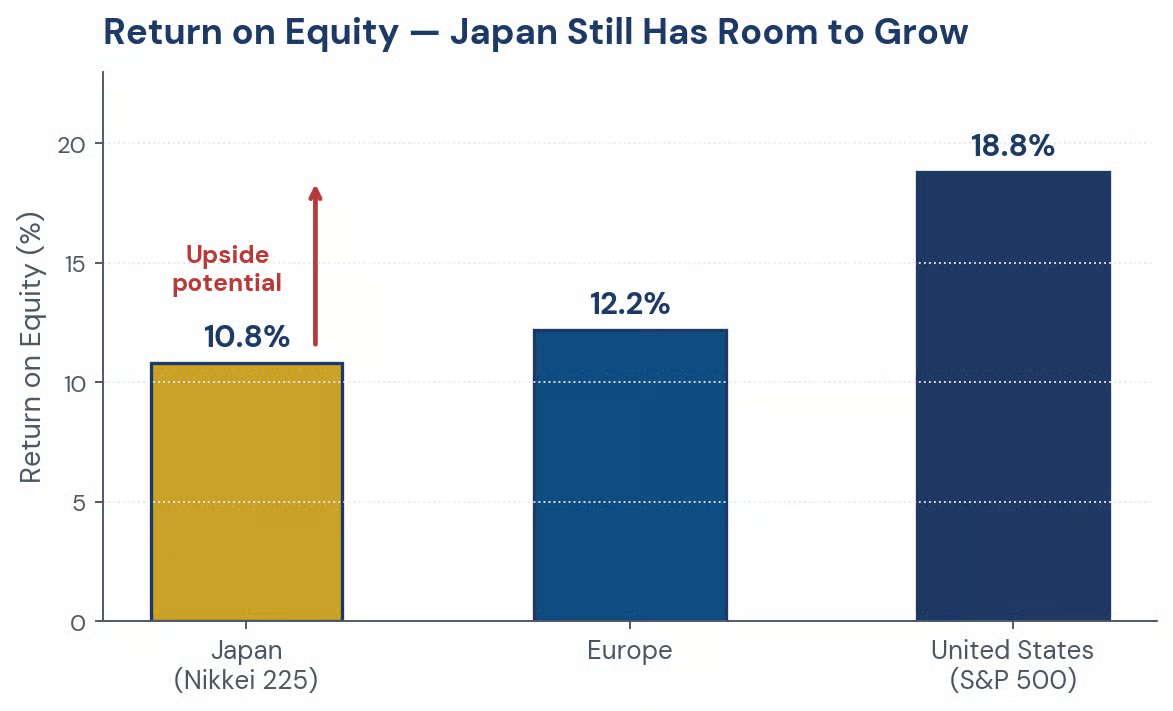 Figure 2. Return on equity — Japan still has meaningful room to grow.
The government is not stopping. In 2025, the Financial Services Agency revised the Stewardship Code to promote greater shareholder engagement. The Tokyo Stock Exchange tightened listing criteria, forcing weaker companies to either improve or face delisting. One hundred twenty‑four companies were delisted in 2025, up from ninety‑four the year before. This is not a sign of weakness. It is a sign that Tokyo is serious about quality over quantity.
Engine Three: Fiscal and Geopolitical Resolve
Prime Minister Sanae Takaichi, Japan’s first female leader, secured a historic supermajority in the February 2026 election. Her Liberal Democratic Party now controls 316 of 465 lower house seats, giving her the legislative power to pursue an aggressive agenda.
That agenda includes three components relevant to investors. First, fiscal stimulus. A 21.3 trillion yen package, including cash handouts and subsidies, is designed to boost household spending and cushion the transition to higher prices. Second, defence. Takaichi has signalled her determination to amend Article 9 of the constitution, explicitly recognising the Self‑Defence Forces, which would open the door to significantly higher defence spending and a domestic defence‑industrial build‑out. Third, technological nationalism. Japan is reviving its domestic semiconductor manufacturing ambitions, including plans to produce 2‑nanometre chips, which will benefit the entire supply chain from equipment makers to materials suppliers.
Geopolitically, a more assertive Japan strengthens the US‑Japan security axis and deepens cooperation with Australia, India, and the Philippines. Tensions with China will likely intensify, particularly over Taiwan, but the market has so far priced this as a manageable risk rather than an existential threat.
Japan has crossed the Rubicon from deflation to normalisation.
Where the Nikkei 225 Stands Today
Valuations, Technicals, and Sentiment
Now let us move from the structural story to the current market reality. As of early April 2026, the Nikkei 225 is trading near 52,000 to 53,000 points, having delivered a remarkable 24 percent return in 2025.
Valuations: Not Cheap, But Not Expensive
The Nikkei 225 trades at a trailing price‑to‑earnings ratio of approximately 17.9 and a forward P/E of 16.9. The cyclically adjusted CAPE ratio stands at 29.4.
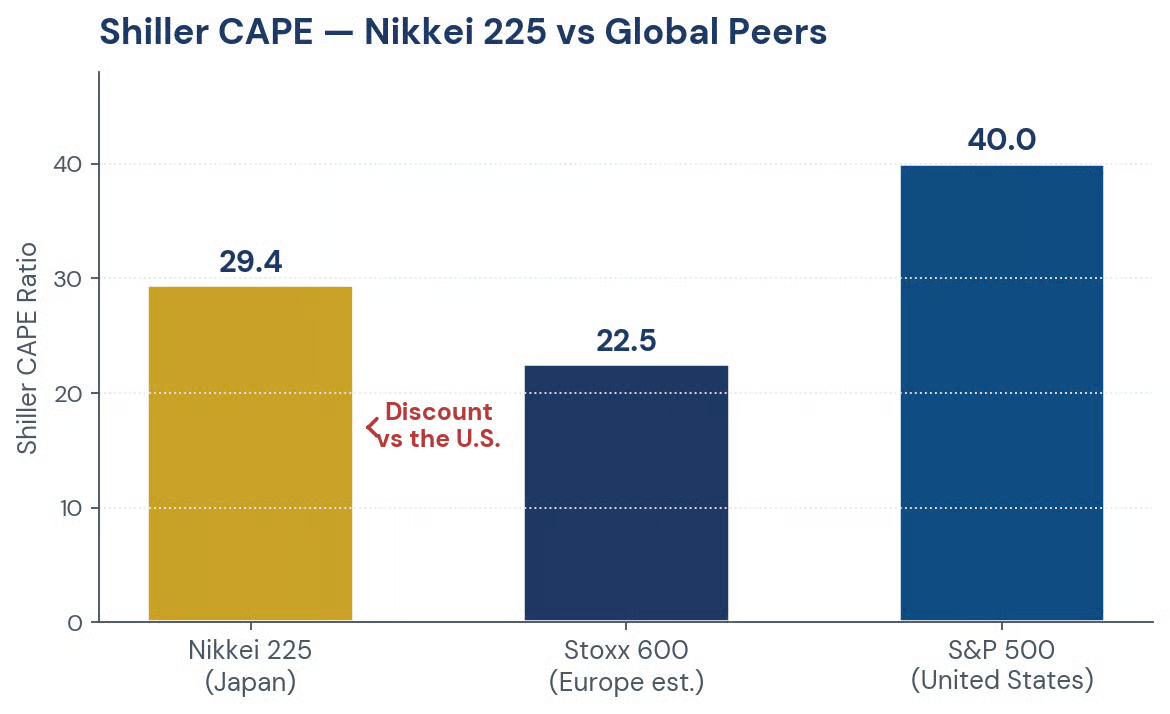 Figure 3. Shiller CAPE — Japan trades at a meaningful discount to the U.S.
How do we interpret these numbers? Compared to Japan’s own history, the market is moderately above its long‑term average forward P/E of around 18, but not dramatically so. Compared to the United States, where the S&P 500 CAPE is near 40, Japan looks genuinely attractive. Compared to Europe, Japan trades at a slight premium, but that premium is justified by superior earnings growth and reform momentum.
The key point is that Japanese valuations are not screaming bubble. They are elevated enough to warrant caution, but not so elevated that a crash is inevitable.
Technical Picture: A Market Catching Its Breath
The technical indicators on the Nikkei 225 are sending a mixed message that we interpret as a healthy pause rather than a terminal top.
The 50‑day moving average recently crossed below the 200‑day moving average — a so‑called Death Cross — which is typically a bearish signal. However, the longer‑term trend remains firmly bullish, with the index trading well above its 200‑day moving average of approximately 47,700.
The Relative Strength Index sits at 47.7, which is neutral territory. This is neither oversold nor overbought. The Moving Average Convergence Divergence indicator is bearish, but the trend strength indicator remains robust.
Our interpretation is straightforward. The Nikkei is in a consolidation phase after a powerful 2025 rally. It is catching its breath, not rolling over. The weight of evidence suggests this is a pause within a longer‑term uptrend, not the beginning of a bear market.
Sentiment and Flows
Foreign investors remain engaged with Japan, attracted by the governance reforms and rising shareholder returns. Domestic savings are gradually being repatriated as Japanese investors shift from foreign bonds back into yen‑denominated assets.
The one cautionary note is the yen. The currency remains weak, trading near historic lows against the dollar, which benefits exporters but creates volatility. The August 2024 crash, when the Nikkei fell 26 percent in a matter of weeks due to a carry‑trade unwind, remains a vivid warning of what can happen when the yen reverses sharply.
Our Nikkei Roadmap — Four Phases Over 12 to 18 Months
Now we arrive at the core of our analysis. Based on the weight of evidence — the monetary trajectory, the fiscal stimulus, the reform momentum, the valuation picture, and the technical signals — we have constructed a four‑phase roadmap for the Nikkei 225.
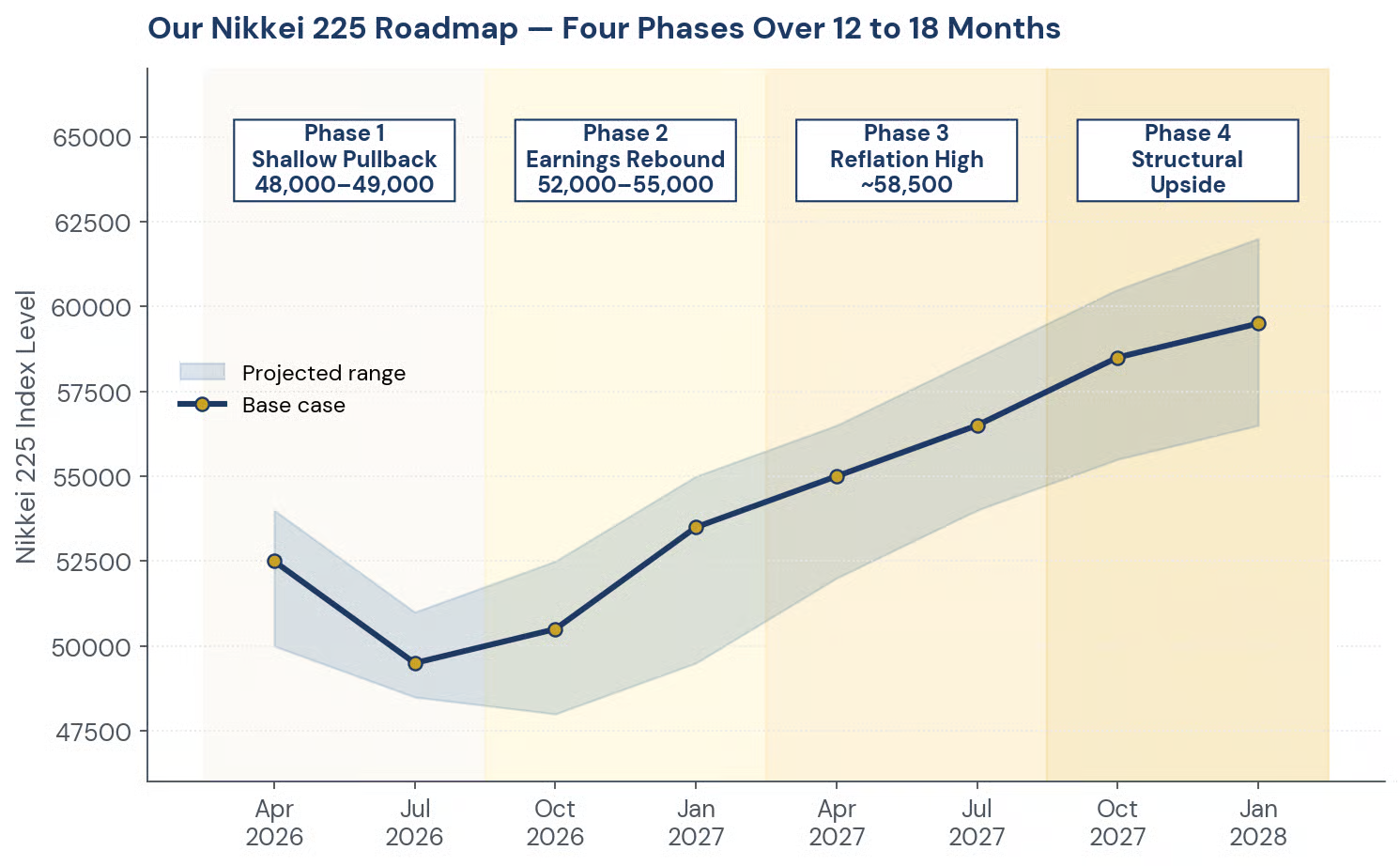 Figure 4. Four-phase roadmap — shallow pullback, earnings rebound, reflation high, structural upside.
Phase One: The Shallow Pullback (Mid‑2026)
We expect the Nikkei to experience a modest correction in the coming months, likely taking the index from its current range near 52,000 to 53,000 down to approximately 48,000 to 49,000.
Why a pullback? Three reasons. First, the technical Death Cross we mentioned earlier will likely spook momentum traders and trigger some selling. Second, the Bank of Japan is expected to raise rates twice in 2026, and each hike creates temporary uncertainty. Third, geopolitical tensions with China tend to flare periodically, and the market has become accustomed to pricing in short‑term volatility.
However, we emphasise the word shallow. This is not a crash. This is a normal consolidation within a bull market. The expected decline of 8 to 10 percent is healthy, not catastrophic.
Phase Two: The Earnings‑Driven Rebound (Late 2026)
The catalyst for the next leg higher will be earnings. Japanese companies delivered a remarkable 72 percent year‑over‑year earnings growth for the top ten Nikkei constituents in the most recent quarter, driven by technology names like Advantest and SoftBank benefiting from artificial intelligence investment.
Looking ahead, analysts expect approximately 9 percent earnings growth over the next twelve months. The technology sector will continue to lead, supported by government initiatives to rebuild domestic semiconductor manufacturing. The financial sector will benefit from widening interest margins as the Bank of Japan normalises policy. Consumer staples will gain from rising wages and fiscal stimulus.
As these earnings materialise, we expect the Nikkei to recover from its pullback lows and trade back into the 52,000 to 55,000 range by late 2026.
Phase Three: The Reflation High (Early to Mid‑2027)
The most exciting phase of this cycle, in our view, will come in 2027. By then, several factors should align.
Real wages will likely be positive, driving genuine consumption growth. The Bank of Japan will have completed most of its rate‑hiking cycle, removing uncertainty. The fiscal stimulus will have worked its way through the economy. And the corporate governance reforms will have delivered another year of improved returns on equity and share buybacks.
Our base case target for the Nikkei 225 by the end of 2027 is 58,500. This represents approximately 15 percent upside from current levels and would bring the index to new all‑time highs.
Phase Four: Long‑Term Structural Upside (2028 and Beyond)
Looking beyond our 18‑month horizon, the case for Japan becomes even more compelling. The International Monetary Fund projects that Japan’s debt‑to‑GDP ratio, currently above 200 percent, will begin a gradual decline from 2035 as growth outpaces new borrowing. The Tokyo Stock Exchange reforms will continue to weed out weak listings and reward shareholder‑friendly behaviour. And Japan’s role as a strategic hedge against China will attract persistent foreign capital.
We are not calling for a Japanese version of the 1980s bubble. That would be irresponsible. But we are calling for a sustained, multi‑year re‑rating of Japanese equities as the market transitions from a deflationary past to a normal, reflationary future.
Risks That Could Derail the Roadmap
No forecast is complete without an honest discussion of what could go wrong. We see four primary risks to our Nikkei outlook.
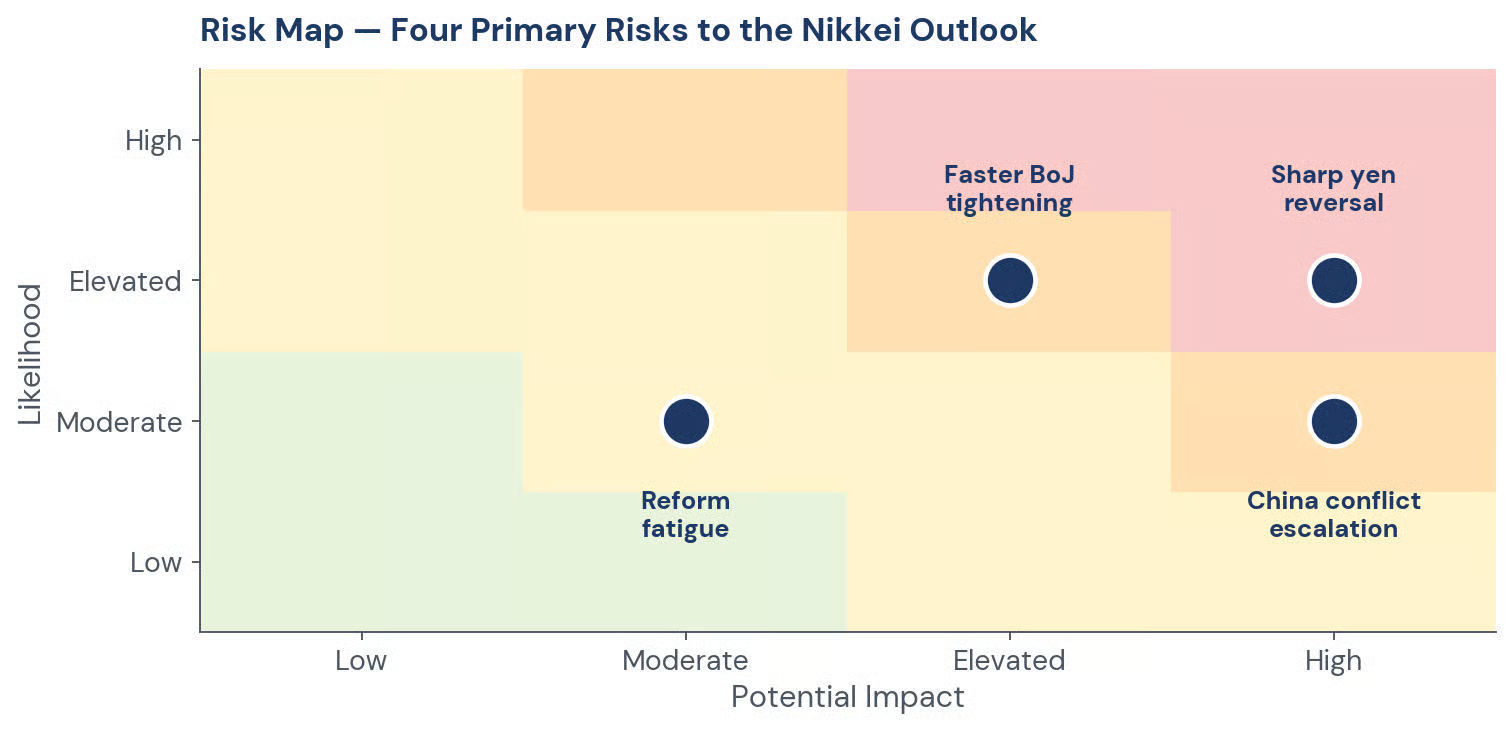 Figure 5. Risk map — likelihood versus potential impact of the four primary risks.
Risk One: A Sharper‑Than‑Expected Bank of Japan Tightening Cycle
The market currently expects the Bank of Japan to raise rates to approximately 1.25 percent by the end of 2026. If inflation proves more persistent and the Bank is forced to accelerate hikes — perhaps to 1.5 percent or higher — the impact on valuations could be more severe. Higher rates compress price‑to‑earnings multiples, and Japanese companies remain more leveraged than their American counterparts.
Risk Two: A Sharp Yen Reversal
The yen is currently very weak, which benefits exporters but creates a dangerous asymmetry. If the yen strengthens rapidly — for example, if the Federal Reserve cuts rates aggressively while the Bank of Japan continues hiking — the carry trade could unwind violently. We saw this in August 2024, when the Nikkei fell 26 percent in weeks. A repeat of that event would create a buying opportunity, but only for those with the courage and the cash to act.
Risk Three: Escalating Geopolitical Conflict with China
Prime Minister Takaichi has taken a more assertive stance on Taiwan and the Senkaku Islands. China has responded with increased military activity. While our base case assumes tensions remain contained, an escalation — particularly one that disrupts trade or supply chains — would weigh heavily on Japan’s export‑heavy equity index.
Risk Four: Reform Fatigue
The corporate governance reforms have delivered impressive early results, but they require sustained effort. If companies begin to backslide, or if the Tokyo Stock Exchange loses its appetite for enforcement, the valuation re‑rating could stall. We will be watching the percentage of companies with price‑to‑book ratios above one and return on equity above 8 percent as our key metrics. A stall in those numbers would be an early warning sign.
Our Tactical Playbook for Japan
Given this roadmap, here is exactly how we are positioning our fund.
Current Positioning (Mid‑2026 Pullback Phase)
We are maintaining a moderate overweight to Japanese equities, with approximately 15 to 20 percent of our global equity allocation dedicated to Japan. Within that allocation, we are favouring three sectors. Technology, particularly semiconductor equipment makers and artificial intelligence beneficiaries, because this is where the earnings growth is strongest. Financials, because banks benefit directly from rising interest rates. And defence, because Prime Minister Takaichi’s rearmament agenda is real and funded.
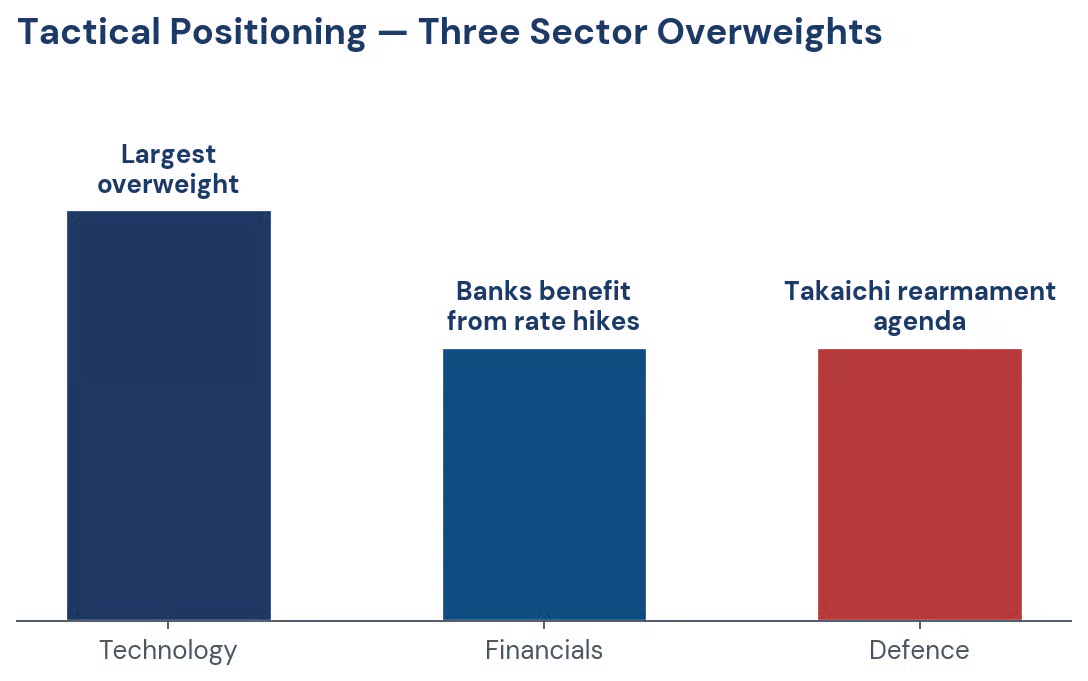 Figure 6. Our tactical positioning — three sector overweights.
We are holding higher‑than‑normal cash reserves in yen, which allows us to add to our positions if the pullback extends further than expected. We are not using leverage, given the currency risk.
Opportunistic Buying Zone (48,000 to 49,000 on the Nikkei)
If the Nikkei falls into the 48,000 to 49,000 range, we will become aggressive buyers. This level represents a roughly 8 to 10 percent decline from current levels and would bring valuations back to historically attractive levels. We have a watch list of thirty high‑quality Japanese companies — dominant exporters, domestic consumer leaders, and financial institutions — that we will purchase in size at these levels.
Full Deployment (Below 45,000 on the Nikkei)
A decline below 45,000 would require a genuine shock — perhaps a rapid yen reversal or a geopolitical escalation. In that scenario, we would deploy substantially all of our Japanese cash reserves. We view a Nikkei below 45,000 as a gift, not a crisis. The structural story of reform, reflation, and improved governance does not change because of a market panic. It simply becomes cheaper.
Profit‑Taking Levels (Above 58,000 on the Nikkei)
We will begin taking partial profits when the Nikkei approaches 58,000, which is our base case 2027 target. We will trim our most extended positions — those that have doubled or tripled — and rotate the proceeds into laggards within the Japanese market or into other international markets that offer better value.
Probabilities, Not Predictions
As with our US strategy, we assign probabilities to outcomes rather than pretending to predict the future.
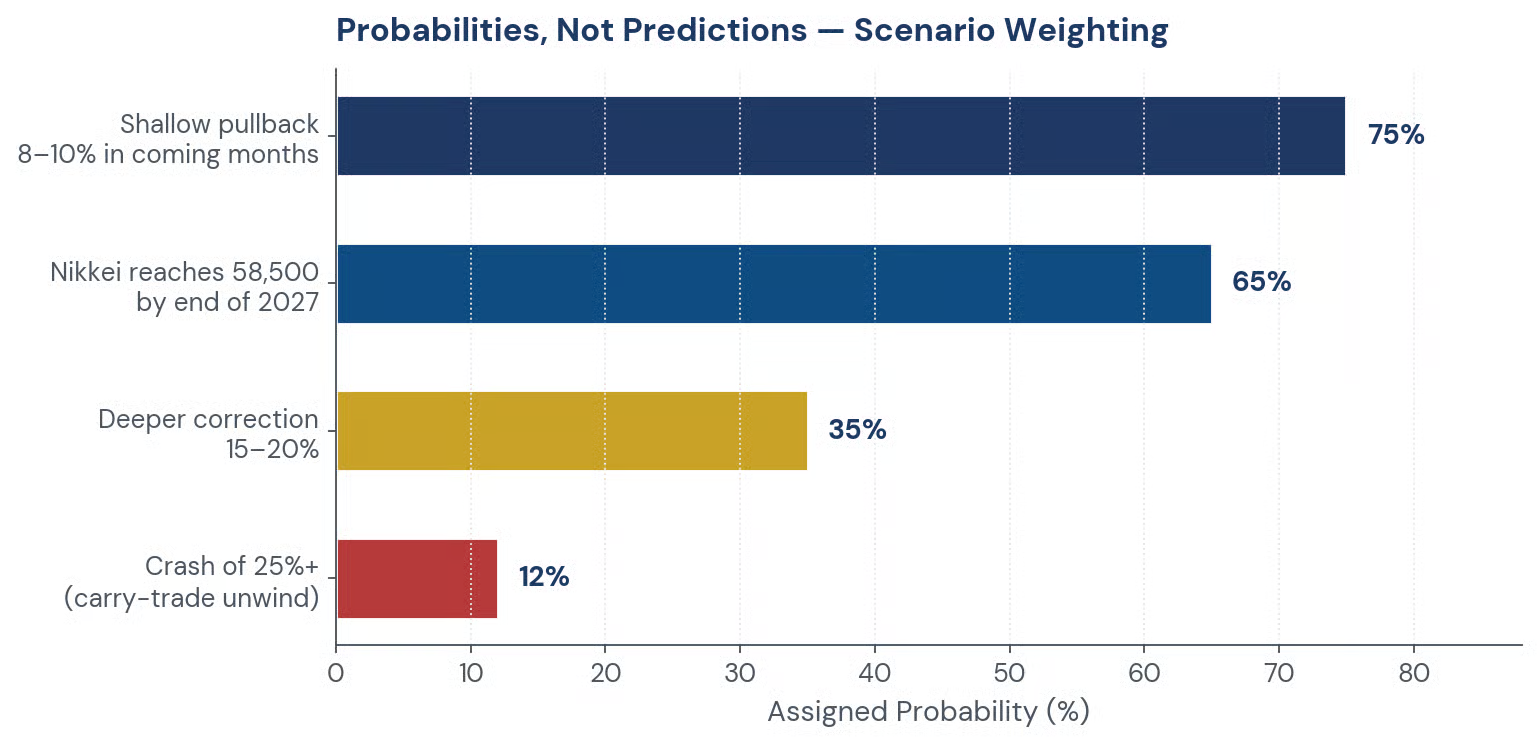 Figure 7. Scenario probabilities — our central expectations, not predictions.
A shallow pullback of 8 to 10 percent over the coming months: we assign a 75 percent probability. This is our base case, and we are positioned to add on weakness.
A deeper correction of 15 to 20 percent: we assign a 35 percent probability. This would require a genuine shock, but it is possible. Our cash reserves protect us.
A crash of 25 percent or more: we assign a 10 to 15 percent probability. This is a tail risk, but one we have modelled. The August 2024 event proved it can happen. We have hedges in place.
The Nikkei reaching 58,500 by the end of 2027: we assign a 65 percent probability. This is our central expectation, but it depends on the Bank of Japan navigating a narrow path and global trade tensions remaining contained.
The Behavioural Trap — Why Investors Underown Japan
Before we close, we must address the elephant in the room. Global investors dramatically underweight Japan relative to its economic weight. The reasons are entirely behavioural.
Recency bias is the primary culprit. For thirty years, Japan disappointed. Investors who bought in 1990, 2000, or 2010 were repeatedly burned. The brain remembers pain more vividly than gain, so most investors simply wrote Japan off.
Confirmation bias reinforces the error. When a Japan skeptic sees a headline about aging demographics or high debt, they say, “See, nothing has changed.” They ignore the wage growth, the governance reforms, the semiconductor build‑out, and the geopolitical realignment.
Herding behaviour completes the trap. No portfolio manager has ever been fired for underweighting Japan. It is the consensus position. But consensus is precisely where alpha is not.
We are not making that mistake. The weight of evidence tells us that Japan has genuinely changed.
The Nikkei 225 is not the index of 1990. It is not even the index of 2020. It is a market in the midst of a structural re‑rating, and we intend to participate.
The Bottom Line — A Summary for the Busy Reader
If you remember nothing else from this newsletter, remember these eight points.
First, Japan has exited three decades of deflation. Wages are rising, inflation is stable, and the Bank of Japan is normalising policy.
Second, corporate governance reforms are working. Price‑to‑book ratios and returns on equity are improving, and the Tokyo Stock Exchange is serious about quality.
Third, Prime Minister Takaichi has a historic mandate for fiscal stimulus, defence build‑out, and technological nationalism.
Fourth, valuations are reasonable. The Nikkei is not cheap, but it is dramatically cheaper than the United States.
Fifth, we expect a shallow pullback to 48,000 to 49,000 in the coming months, followed by an earnings‑driven recovery.
Sixth, our base case target for the Nikkei is 58,500 by the end of 2027, representing approximately 15 percent upside.
Seventh, the risks are real but manageable: faster Bank of Japan tightening, a sharp yen reversal, geopolitical conflict with China, and reform fatigue.
Eighth, and most important, we are positioned to add on weakness. The structural story is intact. The only question is price.
Thank you for reading. We will continue to monitor the weight of evidence in Japan and adjust our positioning accordingly. As always, we welcome your questions and your scepticism. In this business, blind faith is the enemy. Clear thinking is the only ally.
DISCLAIMER This newsletter is published for informational and educational purposes only. Nothing contained herein constitutes investment advice, a solicitation, or a recommendation to buy or sell any financial instrument. Past commentary does not guarantee future results. Please consult a licensed financial advisor before making any investment decisions. |