Sector Spotlight
Three Markets, Three Buys, Three Avoids
Bull, Bear, Bust · 20 May 2026 · 16 min read
MONTHLY RESEARCH · SECTOR SELECTION
Sector Selection: United States, Japan, China
Bull, Bear, Bust · The Monthly Macro Memo · May 2026
Introduction: Our Sector Selection Framework
Before we identify specific sectors, let us briefly remind you how we evaluate sector opportunities.
Our process combines four pillars: Monetary conditions, Economic trends, Valuation metrics, and Technical signals. Within each sector, we ask the same set of questions.
Are monetary conditions supportive of this sector? Banks love rising rates. Utilities hate them. Technology is indifferent to rates but obsessed with growth.
Is the economic cycle favouring this sector? Early cycle favours cyclicals. Late cycle favours defensives. Recession favours cash and bonds.
Is valuation reasonable relative to history and peers? A great sector at a terrible price is a terrible investment.
Is the technical picture constructive? Is the sector in an uptrend? Is breadth healthy? Is sentiment at an extreme?
When all four pillars align, we have a high-conviction buy. When they diverge, we are cautious. When they all point south, we avoid entirely.
Here, then, is our current sector scorecard for the United States, Japan, and China.
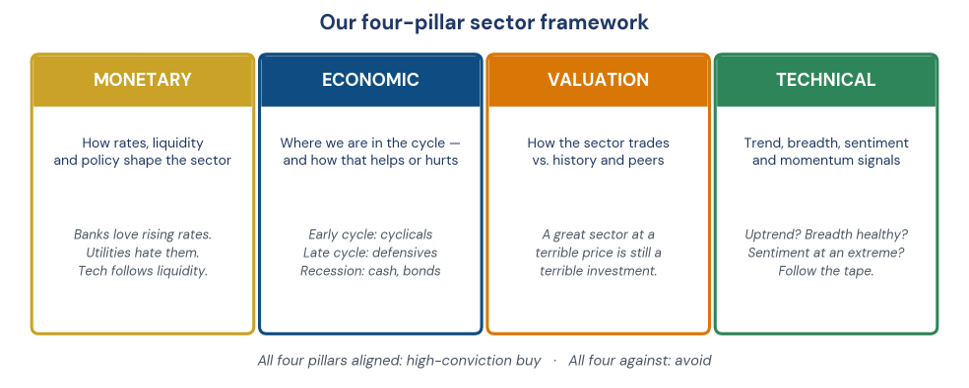 Figure 1. Our four-pillar sector framework — Monetary, Economic, Valuation, Technical.
KEY POINTS A quick-read snapshot of this newsletter's commentary
▸ We apply our four-pillar MEVT framework — Monetary, Economic, Valuation, Technical — to every sector. When all four align, we have a high-conviction buy. ▸ United States BUYS: Energy, Healthcare, Consumer Staples — defensives and supply-shock beneficiaries that fit a late-cycle, elevated-recession-risk environment. ▸ United States AVOIDS: Technology (ex-semiconductors), Real Estate (REITs), Consumer Discretionary — expensive, rate-sensitive, and most exposed to slowing consumer demand. ▸ Japan BUYS: Semiconductors and equipment, Banks, Construction and Materials — exporters with AI tailwinds, banks finally benefiting from rate normalisation, and domestic infrastructure beneficiaries. ▸ Japan AVOIDS: Utilities, Real Estate, Export-oriented consumer goods (autos ex-EV leaders) — energy-cost-squeezed, rate-sensitive, or structurally challenged. ▸ China BUYS: AI and Semiconductors, Healthcare and Biotech, Food and Beverage — government-backed structural themes plus beaten-down value with attractive valuations. ▸ China AVOIDS: Real Estate, Traditional Retail, Export Consumer Goods (textiles, footwear) — expensive despite fundamental stress, disrupted, or exposed to global recession risk. ▸ Sector selection is not static. It changes as the weight of evidence shifts. We have clear triggers to add, reduce, or exit each position. Vigilant, not fearful. |
United States: Three Buys
Buy #1: Energy
Why we are buying: The geopolitical backdrop is unambiguous. The Strait of Hormuz closure has created a genuine supply shock. Oil prices are elevated and likely to remain so for the foreseeable future. Energy companies are generating record free cash flow, paying down debt, and returning capital to shareholders.
The pillars:
- Monetary: Neutral. Energy does not care about interest rates.
- Economic: Bullish. Higher oil prices directly boost revenues and margins.
- Valuation: Attractive. The sector trades at a significant discount to the broader market on P/E, P/CF, and EV/EBITDA.
- Technical: Bullish. Energy has been the best-performing sector year-to-date. The trend is up. Breadth is strong.
Our specific focus: Large-cap integrated oils with strong balance sheets and shareholder return programs. Marathon Petroleum remains a core holding. We also like select oil services names that benefit from increased drilling activity.
The risk: A rapid resolution of the Middle East conflict. If the Strait of Hormuz reopens fully and oil prices collapse, energy stocks will correct sharply. We are monitoring ceasefire negotiations daily.
Buy #2: Healthcare
Why we are buying: Healthcare is defensive. In a late-cycle environment with elevated recession risk, defensives outperform. But within healthcare, we are being selective. We favour large-cap pharmaceuticals with strong pipelines and biotech names with near-term catalysts.
The pillars:
- Monetary: Neutral. Healthcare is not rate-sensitive.
- Economic: Bullish. Recession or no recession, people still need medication and medical care.
- Valuation: Attractive. The sector has underperformed for years. Valuations are reasonable relative to history.
- Technical: Improving. Healthcare has begun to show relative strength. Breadth is constructive.
Our specific focus: Large-cap pharma with dividend growth. Select biotech names with late-stage trials and partnerships. We are avoiding hospital operators, which are sensitive to labour costs and utilisation rates.
The risk: Regulatory intervention. Drug pricing remains a political football. A sharp change in policy could hurt margins. We are monitoring the political calendar.
Buy #3: Consumer Staples
Why we are buying: Staples is the most defensive sector in the index. When consumers are worried, they still buy food, household products, and tobacco. Staples also offers reliable dividends, which become more attractive when growth stocks falter.
The pillars:
- Monetary: Neutral. Staples does not care about rates.
- Economic: Bullish for relative performance. Staples underperforms in booms and outperforms in busts. We are in the bust camp.
- Valuation: Fair. Not cheap, not expensive. The premium for defensiveness is reasonable.
- Technical: Improving. Staples have begun to show relative strength after years of underperformance.
Our specific focus: Branded consumer products with pricing power. Tobacco names with high free cash flow yields. Select food and beverage companies with strong distribution networks.
The risk: A sharp decline in input costs. If commodity prices fall, staples companies may face inventory writedowns. More importantly, if the economy surprises to the upside, staples will lag.
United States: Three Avoids
Avoid #1: Technology (ex-semiconductors)
Why we are avoiding: Technology is expensive. The sector trades at a significant premium to the market on every valuation metric. And the earnings growth that justified that premium is slowing. The AI narrative has been fully priced — and then some.
The pillars:
- Monetary: Negative. Technology is sensitive to liquidity conditions. Liquidity is draining.
- Economic: Negative. Technology is a growth sector. Growth is slowing.
- Valuation: Extremely negative. The sector trades near all-time highs on P/E, P/S, and P/CF.
- Technical: Deteriorating. Breadth within technology is terrible. A handful of mega-caps are holding up the sector while the average tech stock falls.
Our specific exposure: We have reduced our technology exposure to near zero. We hold no mega-cap tech. We have small positions in select semiconductors (see Japan section) but no broad tech exposure.
The trigger to revisit: A significant correction that resets valuations. Until then, we are happy to be underweight.
Avoid #2: Real Estate (REITs)
Why we are avoiding: Real estate is interest-rate sensitive. Rates are not falling. The Fed is trapped. And the commercial real estate market is under significant stress from remote work, refinancing challenges, and weakening demand.
The pillars:
- Monetary: Negative. REITs are bond proxies. Bond proxies suffer when yields rise or stay high.
- Economic: Negative. Office and retail REITs face structural headwinds. Industrial and data centre REITs are better positioned, but the sector as a whole is challenged.
- Valuation: Fair to expensive. The dividend yields are no longer compelling relative to risk-free rates.
- Technical: Bearish. The sector has been in a downtrend for two years.
Our specific exposure: Zero. We own no REITs directly. We have minimal exposure through broad market ETFs.
The trigger to revisit: A sharp decline in long-term yields or a clear resolution of the commercial real estate crisis. Neither appears imminent.
Avoid #3: Consumer Discretionary
Why we are avoiding: Discretionary is the most cyclical sector in the index. When consumers are worried, they stop buying cars, furniture, and holidays. We expect consumers to be very worried over the next 12 months.
The pillars:
- Monetary: Negative. Discretionary is sensitive to credit conditions. Credit is tightening.
- Economic: Negative. The sector is highly correlated with consumer confidence and employment. Both are softening.
- Valuation: Expensive. The sector trades at a significant premium to its historical average.
- Technical: Bearish. The sector has broken down technically. Relative strength is deteriorating.
Our specific exposure: Minimal. We own no auto stocks, no retailers, no homebuilders. We have small positions in select luxury goods names with global pricing power, but these are exceptions, not the rule.
The trigger to revisit: A significant improvement in consumer sentiment or a sharp decline in interest rates that reignites housing and auto demand. Neither appears likely.
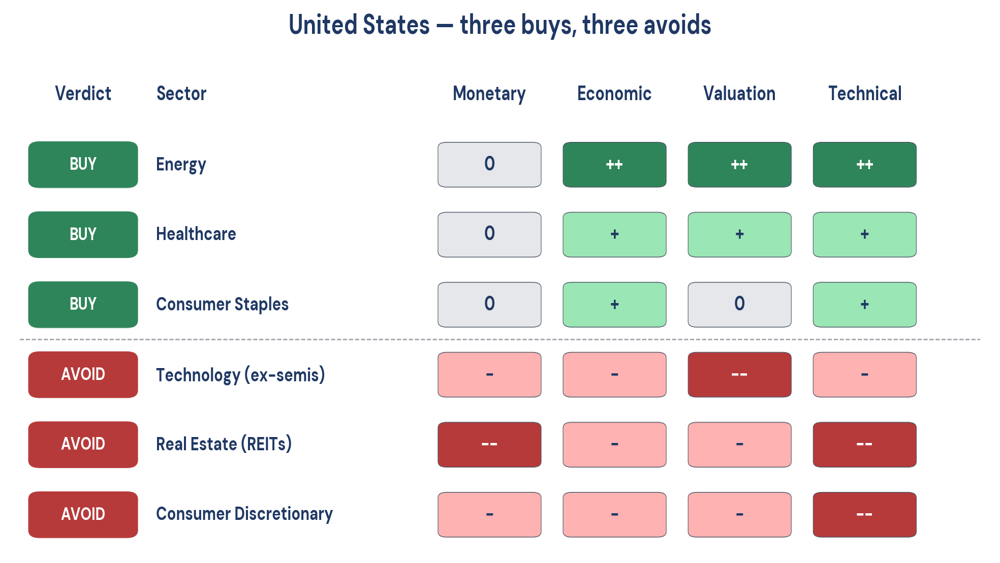 Figure 2. United States — six sectors scored across the four MEVT pillars.
Japan: Three Buys
Buy #1: Semiconductors and Semiconductor Equipment
Why we are buying: Japan is a critical node in the global semiconductor supply chain. Tokyo Electron, Disco, and Lasertec make the machines that make the chips. As long as the world needs more computing power — and AI ensures that it does — these companies have pricing power that is distinct from consumer-facing technology.
The pillars:
- Monetary: Positive. The weak yen is a significant tailwind for exporters.
- Economic: Positive. Global semiconductor demand remains robust. AI capital spending is accelerating.
- Valuation: Fair. Not cheap, but not expensive relative to global peers. Citi notes that the price-to-earnings-growth ratio for Japanese tech is currently below that of the TOPIX, indicating reasonable valuations.
- Technical: Bullish. The sector has been leading the market. JPMorgan recently raised its Nikkei 225 year-end target to 70,000 from 61,000, citing AI and semiconductor strength.
Our specific focus: Tokyo Electron (semiconductor equipment), Disco (precision cutting and grinding tools), Lasertec (inspection equipment). We also like select materials suppliers.
The risk: A sharp slowdown in global AI capital spending or a significant strengthening of the yen. We are monitoring both.
Buy #2: Banks
Why we are buying: Japanese banks are finally beneficiaries of rising rates. After decades of zero interest rates, the Bank of Japan is normalising policy. The latest forecasts show core CPI at 2.8 per cent for fiscal 2026, up from 1.9 per cent previously. Rate hikes are coming.
The pillars:
- Monetary: Strongly positive. Rising rates expand net interest margins. The Bank of Japan is expected to raise rates to 1.00 per cent by July 2026, with further hikes to follow.
- Economic: Positive. The Japanese economy is healing. Real wages are expected to return to positive territory in 2026, supporting loan growth.
- Valuation: Attractive. Japanese banks trade at significant discounts to book value. The TOPIX-17 Banks sector's average P/B has historically been low, but earnings expansion is now accelerating.
- Technical: Bullish. The sector has been leading the market. The TOPIX-17 Banks sector shows both earnings and price appreciation accelerating.
Our specific focus: Mitsubishi UFJ Financial Group, Sumitomo Mitsui Financial Group, and Mizuho Financial Group — the three mega-banks with the greatest sensitivity to rising rates.
The risk: The Bank of Japan hikes too slowly, or not at all. If inflation moderates unexpectedly, the rate hike cycle could stall. We are monitoring inflation data closely.
Buy #3: Construction and Materials
Why we are buying: Japan is in the midst of a multi-year infrastructure build. Government spending on disaster resilience, semiconductor factories, data centres, and urban redevelopment is substantial. The TOPIX-17 Construction and Materials sector shows both earnings and price appreciation accelerating.
The pillars:
- Monetary: Neutral to positive. Government spending, not monetary policy, drives this sector.
- Economic: Positive. Domestic demand for construction is strong. Labour shortages are pushing up wages, but companies are successfully passing on costs.
- Valuation: Fair. The sector has run, but earnings growth is keeping pace with price appreciation.
- Technical: Bullish. The sector has been in a strong uptrend. Scroll has highlighted the construction and materials sector as a likely leader for 2026.
Our specific focus: Large-cap general contractors with exposure to public infrastructure projects. Materials suppliers benefiting from semiconductor factory construction.
The risk: A sharp slowdown in government spending or a collapse in private sector construction demand. Neither appears likely.
Japan: Three Avoids
Avoid #1: Utilities
Why we are avoiding: Japan imports virtually all of its oil and gas. The Middle East conflict has pushed energy prices higher. Utilities are caught between higher input costs and an inability to pass them fully to consumers due to political pressure.
The pillars:
- Monetary: Negative. Utilities are bond proxies. Rising rates hurt bond proxies.
- Economic: Negative. Higher energy costs squeeze margins. The government's electricity and gas subsidies are being phased out.
- Valuation: Fair. Not cheap enough to compensate for the headwinds.
- Technical: Weak. The sector has underperformed the broader market. Scroll notes that utilities are not among the leadership sectors for 2026.
Our specific exposure: Zero. We own no Japanese utilities.
The trigger to revisit: A sharp decline in energy prices or a change in government policy that allows utilities to pass through costs more freely.
Avoid #2: Real Estate
Why we are avoiding: Japanese real estate is interest-rate sensitive. Rising rates will increase borrowing costs for REITs and property developers. The domestic consumer recovery remains uncertain, which weighs on retail and residential property demand.
The pillars:
- Monetary: Negative. Real estate is sensitive to rates. Rates are rising.
- Economic: Neutral to negative. The consumer recovery is tentative. Office demand remains subdued.
- Valuation: Fair to expensive. The sector has performed well and valuations are no longer compelling.
- Technical: Mixed. Some sub-sectors are holding up, but the broader trend is weakening.
Our specific exposure: Minimal. We own no Japanese REITs directly. We have small exposure through broad market ETFs.
The trigger to revisit: A clear signal that the Bank of Japan's rate hike cycle is ending, or a sharp improvement in domestic consumer demand.
Avoid #3: Export-oriented Consumer Goods (Autos ex-EV leaders)
Why we are avoiding: The weak yen is a tailwind for all exporters. But the auto industry faces structural challenges. The transition to electric vehicles is expensive. Chinese competitors are aggressive. And trade tensions with the United States and Europe could escalate.
The pillars:
- Monetary: Positive (weak yen) but this is already priced in.
- Economic: Mixed. Global auto demand is softening. EV adoption is slowing in some markets.
- Valuation: Fair. Not cheap enough to compensate for the structural risks.
- Technical: Mixed. Traditional auto names have underperformed the EV leaders.
Our specific exposure: Selective. We own Toyota (which has a credible EV strategy) but avoid the weaker players. We prefer semiconductor and battery exposure to direct auto exposure.
The trigger to revisit: A significant weakening of the yen beyond current levels, or a sharp acceleration in global auto demand.
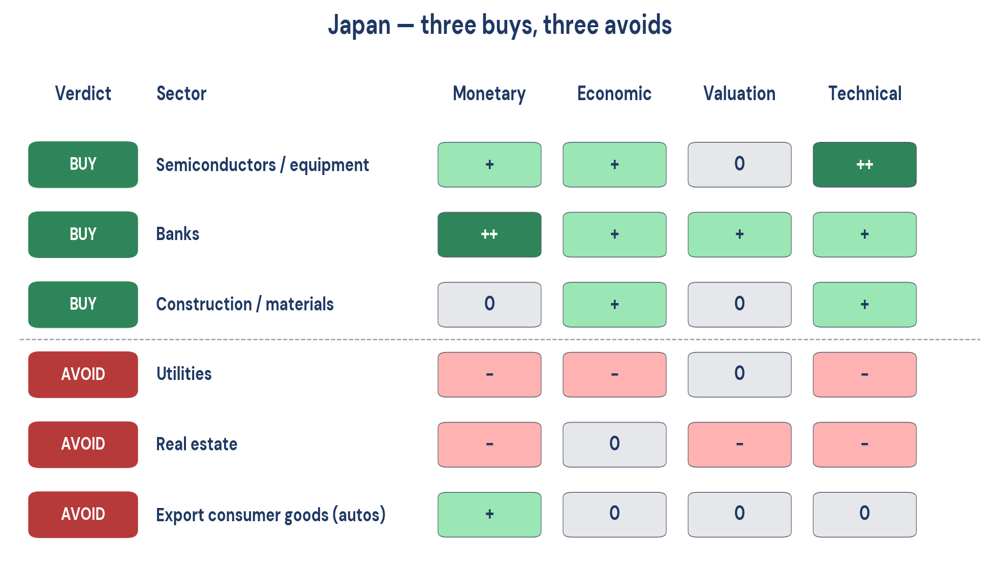 Figure 3. Japan — six sectors scored across the four MEVT pillars.
China: Three Buys
Buy #1: Artificial Intelligence and Semiconductors
Why we are buying: China is racing to catch up to the United States in AI. The government is providing funding and regulatory support. Global AI infrastructure spending is robust, and Chinese suppliers are benefiting. JPMorgan expects stronger global AI infrastructure spending to lift Chinese suppliers and domestic AI monetisation plays.
The pillars:
- Monetary: Positive. The People's Bank of China remains accommodative.
- Economic: Positive. Manufacturing is expanding. Technology investment is a government priority. The new export orders PMI jumped to 50.3 — the first time it has been in expansion territory since April 2024.
- Valuation: Expensive, but justifiably so for leaders. STAR 50 valuations are at the 98th percentile historically. We are being selective.
- Technical: Bullish. The sector has been leading. JPMorgan upgraded China A-shares to overweight, citing wider adoption of artificial intelligence.
Our specific exposure: NAURA (semiconductor equipment), select AI software names with government contracts, and semiconductor supply chain companies.
The risk: US export controls tighten further, cutting off access to advanced chips. This is a real and ongoing risk. We size positions accordingly.
Buy #2: Healthcare and Biotechnology
Why we are buying: Chinese healthcare has been beaten down by regulatory uncertainty. That uncertainty has largely passed. Valuations are attractive. The demographic trend — an ageing population — is undeniable. JPMorgan has identified healthcare as a key beneficiary of China's 2026 market themes.
The pillars:
- Monetary: Neutral. Healthcare is not rate-sensitive.
- Economic: Positive. Healthcare spending is resilient. The government supports innovation.
- Valuation: Attractive. The sector has underperformed significantly. Valuations are near decade lows.
- Technical: Improving. The sector is showing signs of bottoming. Relative strength is improving.
Our specific exposure: Innovent Bio and other biotech names with late-stage pipelines. Select pharmaceutical companies with exposure to the domestic market.
The risk: Regulatory intervention re-emerges. The government could reintroduce price controls or tighten approval processes. We are monitoring policy communications closely.
Buy #3: Food and Beverage
Why we are buying: This sector trades near decade-low valuations. The market has priced in a consumer slowdown that may be overdone. As real wages improve and consumer confidence recovers, food and beverage names should benefit.
The pillars:
- Monetary: Neutral.
- Economic: Contrarian positive. The market expects weak consumption. If consumption surprises to the upside, the sector will re-rate sharply.
- Valuation: Very attractive. The sector is near its cheapest levels in ten years.
- Technical: Bottoming. The sector has stopped falling. Relative strength is stabilising.
Our specific exposure: Leading branded food and beverage companies with distribution networks and pricing power. We are avoiding highly discretionary sub-sectors like premium spirits.
The risk: The consumer does not recover. If real wages remain negative and confidence stays low, food and beverage names will continue to languish.
China: Three Avoids
Avoid #1: Real Estate
Why we are avoiding: The property crisis is not over. It is contained, but not resolved. Real estate valuations are puzzlingly high — the sector trades at the 98th percentile of its historical valuation range. This makes no sense given the fundamental stress. We are avoiding.
The pillars:
- Monetary: Neutral. The People's Bank of China has eased, but the transmission mechanism to property developers is broken.
- Economic: Negative. Property investment is contracting. Sales are weak. Defaults continue.
- Valuation: Extremely negative. The sector is expensive despite the fundamental stress.
- Technical: Weak. The sector has underperformed. Rallies are sold.
Our specific exposure: Zero. We own no Chinese real estate developers or REITs.
The trigger to revisit: A clear government backstop for the entire sector, or valuations that reflect the fundamental reality. Neither appears imminent.
Avoid #2: Traditional Retail
Why we are avoiding: Chinese consumers are cautious. Retail sales growth is positive but modest. The shift to online and live-streaming commerce continues to disrupt traditional brick-and-mortar retailers. We see no catalyst for a re-rating.
The pillars:
- Monetary: Neutral.
- Economic: Negative. Consumption is the weak spot in the Chinese recovery. The non-manufacturing PMI for April fell to 49.4, down from 50.1, with the services sub-index at 49.6.
- Valuation: Fair. Not cheap enough to compensate for the headwinds.
- Technical: Weak. The sector has underperformed.
Our specific exposure: Minimal. We own selected online platforms but avoid traditional retailers entirely.
The trigger to revisit: A sharp acceleration in retail sales growth or a significant improvement in consumer confidence.
Avoid #3: Export-oriented Consumer Goods (Textiles, Footwear, Low-end Manufacturing)
Why we are avoiding: These sectors are exposed to global recession risk. If the United States and Europe slow sharply, demand for discretionary consumer goods will fall. Trade tensions could also escalate, with tariffs or other restrictions.
The pillars:
- Monetary: Neutral.
- Economic: Negative. Export orders have improved, but the global outlook is deteriorating.
- Valuation: Fair to cheap, but cheap can get cheaper in a recession.
- Technical: Neutral to weak.
Our specific exposure: Minimal. We have small positions in select export leaders with market share gains, but our exposure is limited.
The trigger to revisit: A clear resolution of trade tensions or a sharp improvement in the global growth outlook.
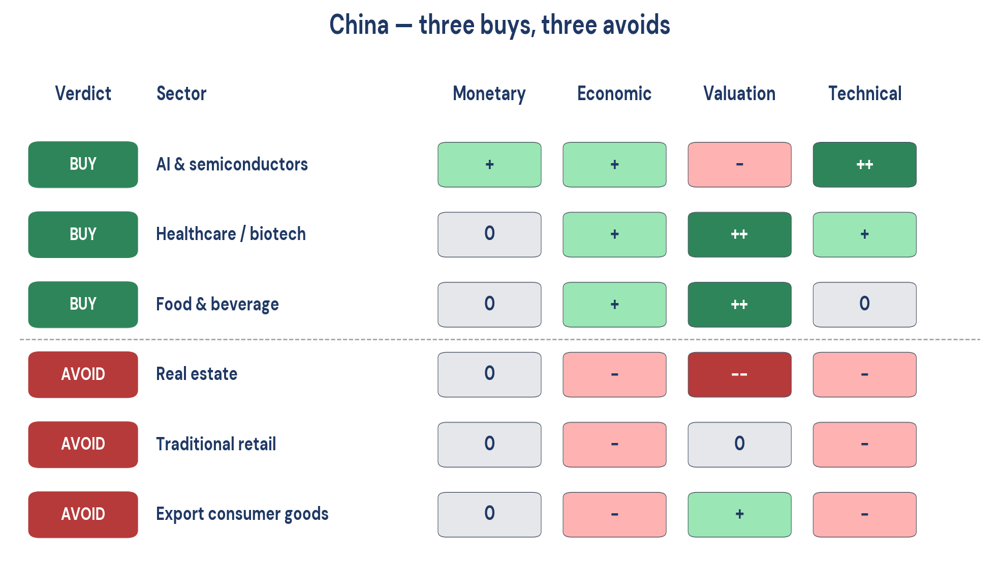 Figure 4. China — six sectors scored across the four MEVT pillars.
Summary: Buys and Avoids by Market
United States — Three Buys: Energy, Healthcare, Consumer Staples. Three Avoids: Technology (ex-semis), Real Estate (REITs), Consumer Discretionary.
Japan — Three Buys: Semiconductors and Semiconductor Equipment, Banks, Construction and Materials. Three Avoids: Utilities, Real Estate, Export-oriented Consumer Goods (autos ex-EV leaders).
China — Three Buys: AI and Semiconductors, Healthcare and Biotech, Food and Beverage. Three Avoids: Real Estate, Traditional Retail, Export-oriented Consumer Goods (textiles, footwear, low-end manufacturing).
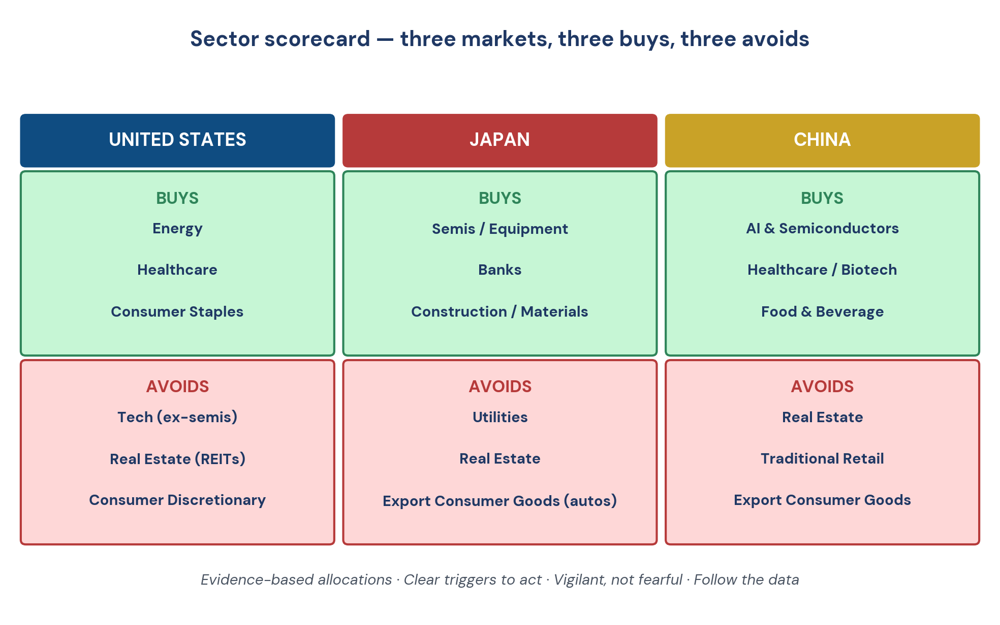 Figure 5. The sector scorecard at a glance — three markets, three buys, three avoids.
Closing Thoughts
Sector selection is not a static exercise. It changes as the weight of evidence shifts. Today, the evidence points us toward energy, healthcare, and staples in the US; semiconductors, banks, and construction in Japan; and AI, healthcare, and food and beverage in China.
These are not momentum trades. They are evidence-based allocations supported by monetary, economic, valuation, and technical analysis. We have clear triggers to add, reduce, or exit each position.
We remain vigilant, not fearful. We follow the data. We trust the process.
DISCLAIMER This newsletter is published for informational and educational purposes only. Nothing contained herein constitutes investment advice, a solicitation, or a recommendation to buy or sell any financial instrument. All investment involves risk, including the loss of principal. Past commentary does not guarantee future results. Any views expressed are those of the author as of the date of publication and are subject to change without notice. Please consult a licensed financial advisor before making any investment decisions. |