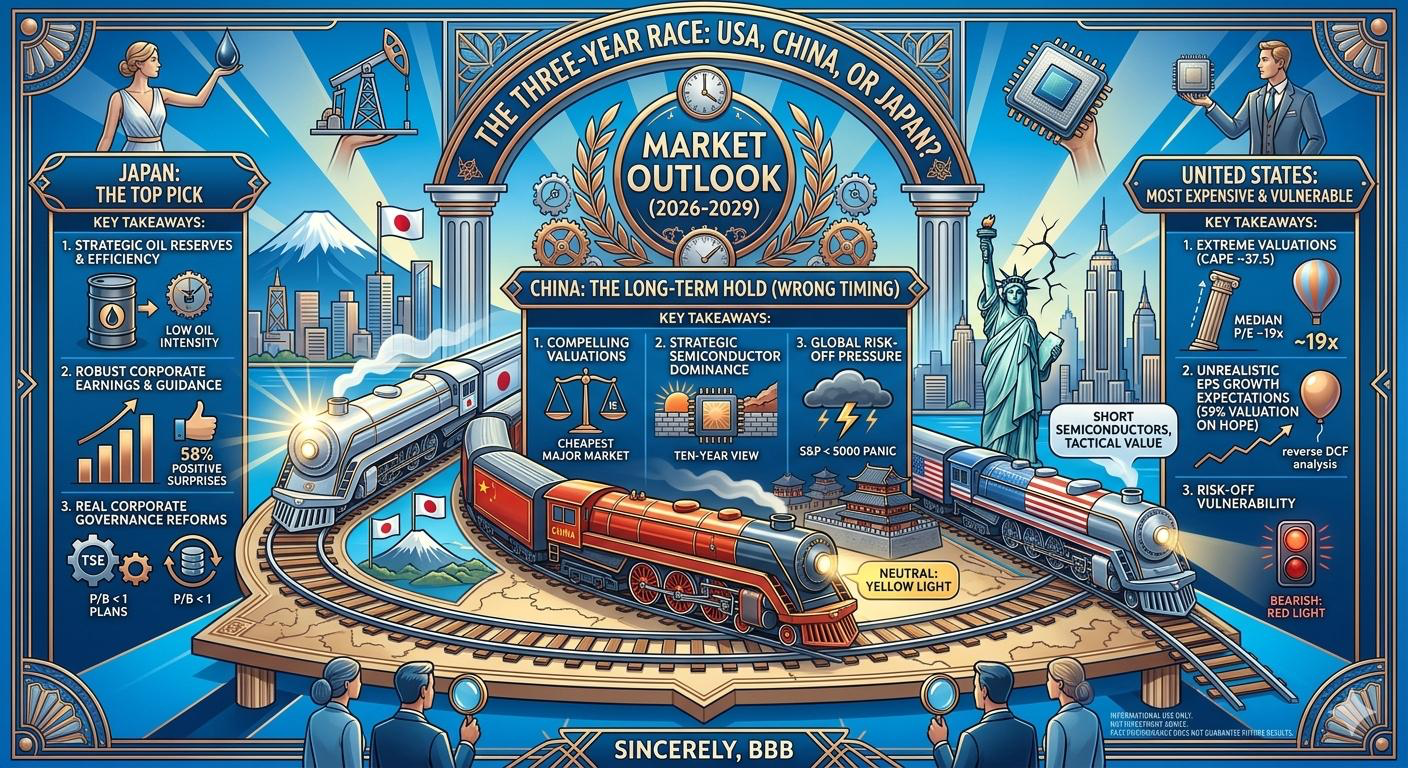
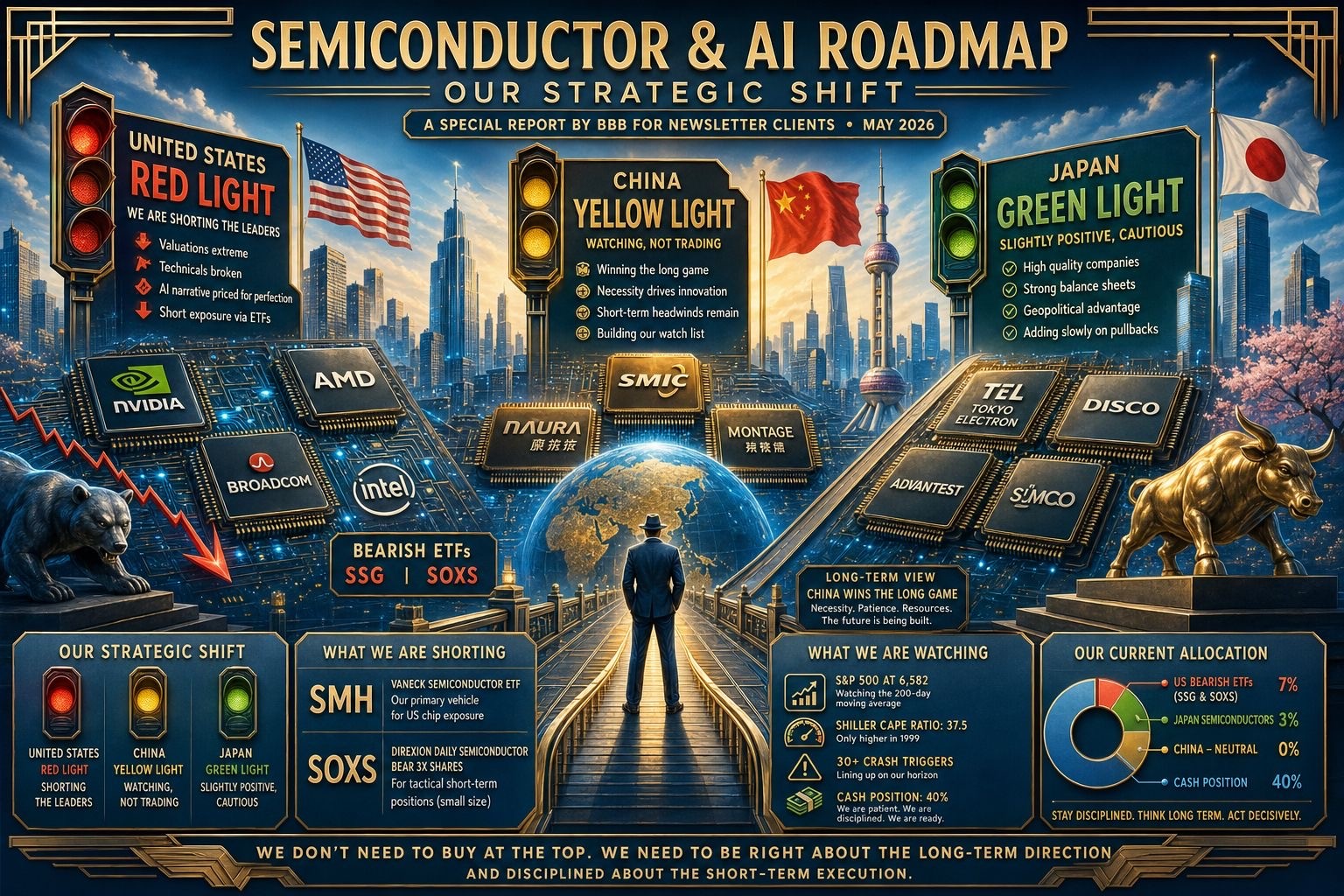
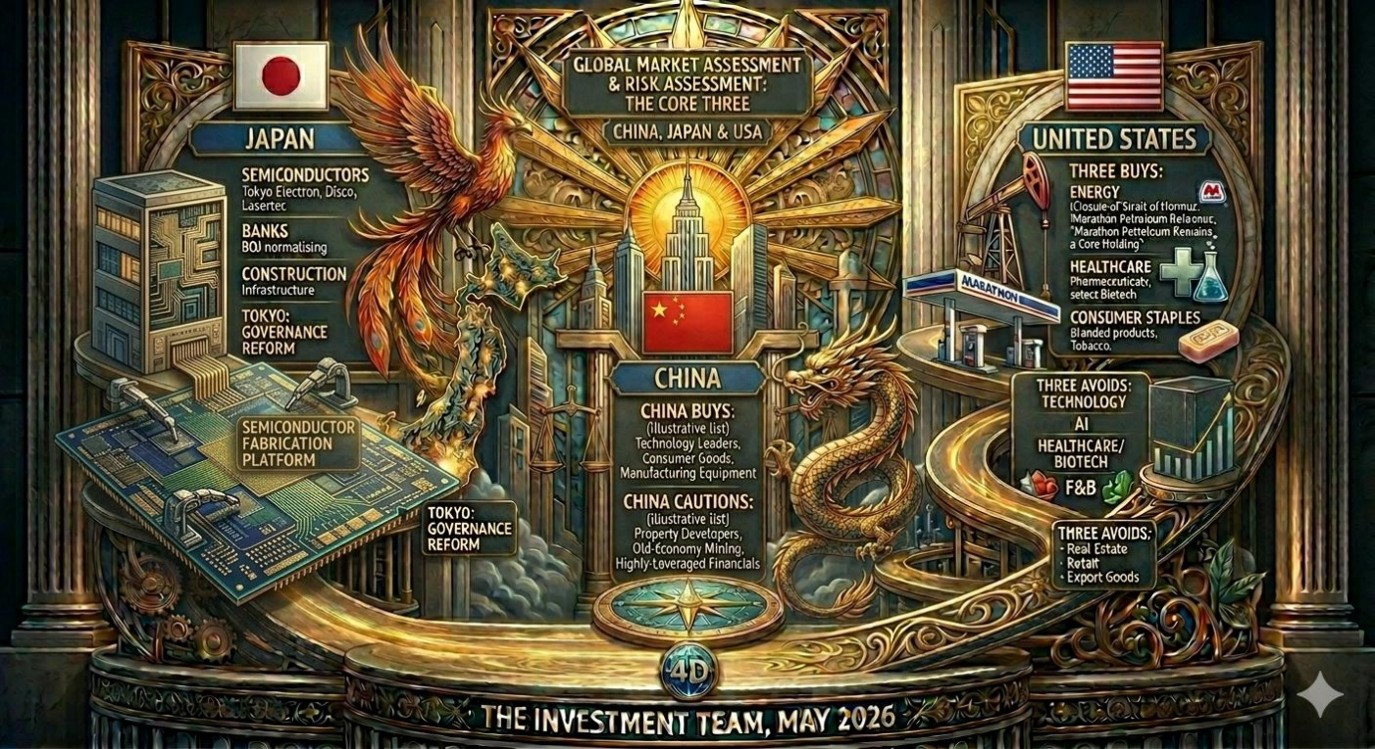
Macro · China · Japan · United States
The Cultural Mood Ring: Reading Fashion, Film, and Headlines Through Dow Theory
Three Phases, One Truth
Bull, Bear, Bust · 11 October 2025 · 10 min read
Dear Client,
Charles Dow understood something that most quants still miss. The stock market is not a calculator. It is a mood ring. Price reflects the collective psychology of millions of human beings making decisions under uncertainty. And that psychology does not stay hidden. It leaks out everywhere — in the clothes we wear, the movies we watch, and the headlines we click.
KEY POINTS A quick-read snapshot of this newsletter's commentary
▸ Dow Theory identifies three phases of any primary trend: accumulation, public participation and distribution. Each has a distinct cultural fingerprint. Accumulation feels like despair, public participation feels like validation, and distribution feels like euphoria. ▸ The United States is in the late distribution phase of a primary bull market that began in 2009. Technology is at near-record allocations in the S&P 500, while financials and healthcare are at multi-decade lows in index weight. ▸ China is in the accumulation phase. The headlines are uniformly terrible, prices are cheap and the cultural mood is sober. We are not buying yet because we believe global risk-off has further to run. ▸ Japan is in the transition from accumulation to early public participation, the sweet spot. We are patiently accumulating Japanese semiconductor equipment names. ▸ Volume confirms the picture: declining in the United States, increasing in China and steady in Japan. ▸ We hold a forty percent cash position and are shorting only semiconductors, because a trend persists until a clear reversal is proven. |
Dow Theory, properly understood, is not just about drawing trendlines on charts. It is about reading the cultural weather. When the atmosphere is right, the primary trend asserts itself. When the mood shifts, the trend follows.
So let us apply the Dow lens to three very different markets — the United States, China, and Japan — and see what the cultural indicators are telling us about which phase of the cycle we occupy.
The Dow Theory Framework: Three Phases, One Truth
Before we interpret fashion and film, let us recall the three phases Dow identified in any primary trend. The accumulation phase occurs when informed investors quietly build positions while sentiment remains skeptical. The public participation phase arrives when the trend becomes obvious and momentum expands. The distribution phase happens when informed capital exits into strength while optimism peaks.
The key insight is that each phase has a distinct cultural fingerprint. Accumulation feels like despair. Public participation feels like validation. Distribution feels like euphoria. Where we are in the cycle determines what we see at the multiplex and on the runway.
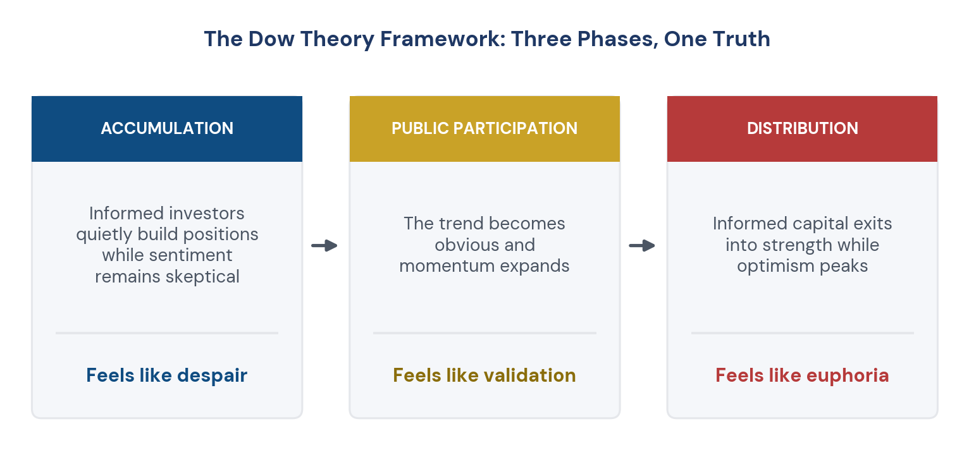 Figure 1. The three phases of a primary trend in Dow Theory, and the cultural fingerprint of each.
The United States: Distribution Phase – Euphoria, Excess, and Exhaustion
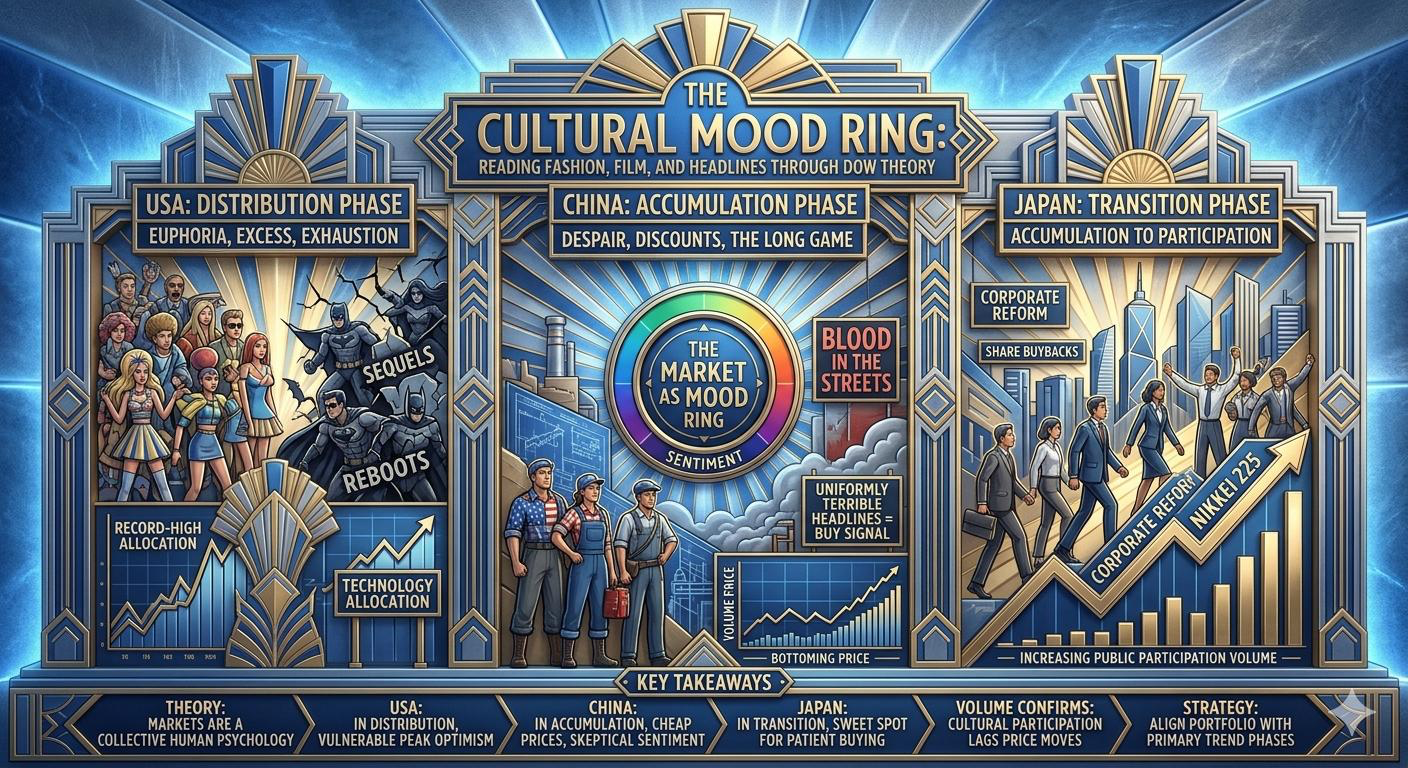
America is in the late distribution phase of a primary bull market that began in 2009 and accelerated dramatically after 2020. Everything Dow Theory warns us about is present.
The cultural signals are overwhelming. Superhero movies continue to dominate the box office, but the genre has grown dark, cynical, and self-referential. According to the framework developed by Robert Prechter's Elliott Wave International, upbeat, sweet-natured Disney movies proliferate during bull markets, while horror and dark themes emerge during bear markets. We are seeing neither pure optimism nor pure horror. We are seeing exhausted spectacle — sequels to sequels, reboots of reboots. This is not the fresh confidence of a mid-bull market. This is the tired maximalism of a market that has run too far.
The fashion indicators are equally telling. The hemline theory, first noted by economist George Taylor in 1926, suggests that rising markets correlate with rising hemlines. Flapper skirts in the roaring twenties. Miniskirts in the booming sixties. The theory held through the 1990s bull market and again in the mid-2000s. But what does it mean when hemlines are confused? What does it mean when designers show everything from micro-minis to floor-length maxis in the same collection?
According to the Erasmus School of Economics study that analyzed hemline data from 1921 to 2009, poor economic times correlate with lower hemlines, but the fashion response lags the economic reality by approximately three years. If the market is peaking now, the fashion response may not fully manifest for several seasons. What we are seeing today — a lack of consensus, a fragmentation of trends — is consistent with a market that has lost its directional conviction. The public participation phase is over. The distribution phase is here.
The headlines confirm the diagnosis. Technology stocks have reached near-record allocations in the S&P 500. Financials and healthcare are at multi-decade lows in index weight. The crowd is chasing performance, not value. This is exactly what distribution looks like. Informed money is exiting into strength. Uninformed money is buying the story. Dow Theory does not tell us when the top will arrive. It tells us we are in the vulnerable phase.
China: Accumulation Phase – Despair, Discounts, and the Long Game
China could not look more different. The CSI 300 has been hammered. Property crisis. Regulatory crackdowns. Geopolitical tension. The headlines are uniformly terrible. And that, in Dow Theory terms, is the single strongest buy signal available.
China is in the accumulation phase. This is when informed investors quietly build positions while sentiment remains skeptical and the media is bearish. The accumulation phase typically occurs after a substantial decline in prices, marked by negative sentiment and frantic selling by uninformed participants. That describes China perfectly.
The cultural signals are subtle but instructive. Chinese cinema has shifted toward patriotic blockbusters and historical epics — stories of national resilience and overcoming adversity. This is not the euphoric, anything-goes culture of a distribution phase. This is the sober, determined culture of a nation preparing for difficult times. In Dow Theory terms, the mood is consistent with accumulation, not capitulation.
Fashion in China has grown more practical and less ostentatious. The era of flashy luxury consumption is fading. The new aesthetic is understated, functional, and domestically focused. This is not the gaudy confidence of a market top. This is the quiet discipline of value being built while others look away.
The headlines in the West remain obsessed with China's problems. That is precisely what accumulation looks like. The news is bad, the sentiment is sour, and the prices are cheap. Dow Theory teaches that informed capital enters when no one else wants to be there. That is where China sits today. We are not buying yet — we believe global risk-off has further to run. But we are watching. And when the moment comes, we will act.
Japan: Transition Phase – From Accumulation to Participation
Japan occupies the most interesting position of the three. After decades of deflation and stagnation, Japan is waking up. The Tokyo Stock Exchange is forcing corporate governance reform. Share buybacks are rising. Dividends are increasing. The mood is shifting.
Dow Theory would place Japan somewhere between the late accumulation phase and the early public participation phase. The informed money has been building positions quietly for several years — the Warren Buffetts of the world bought Japanese trading houses when no one else cared. Now the trend is becoming more obvious. The Nikkei 225 has attracted global attention. Momentum is expanding.
The cultural signals are encouraging. Japanese cinema has produced a string of uplifting, ensemble-driven stories — not the dark, nihilistic horror that Prechter associates with bear markets. The fashion is confident but not gaudy. The headlines are increasingly positive but not yet euphoric.
This is the sweet spot. The worst-case scenario for an investor is buying at the peak of distribution, when everyone is optimistic and prices reflect perfection. The best-case scenario is buying during accumulation, when no one believes. The next-best scenario is buying during the early public participation phase, when the trend has been established but the crowd has not yet piled in. Japan is in that next-best scenario. The risk is lower than in the United States. The upside is significant. That is why we are accumulating Japanese semiconductor equipment names patiently.
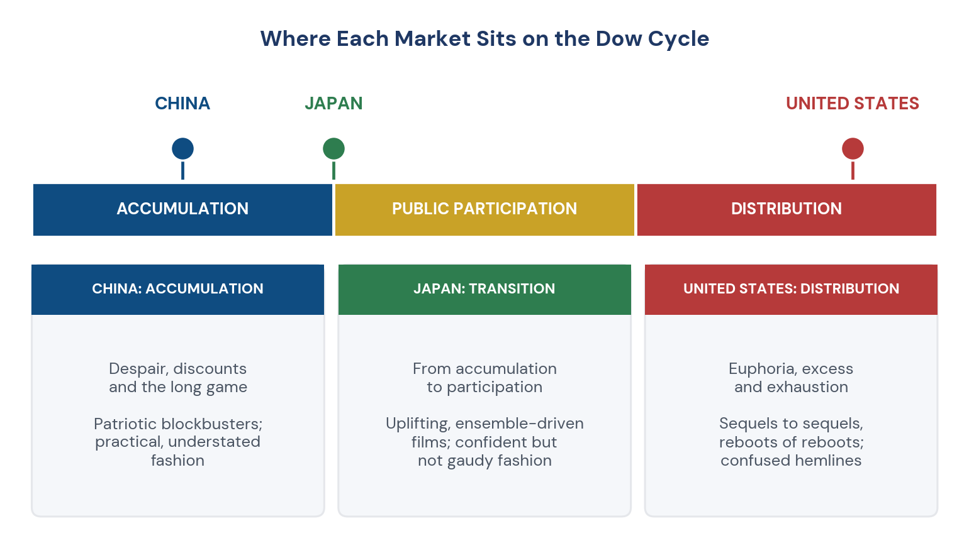 Figure 2. Where the United States, China and Japan sit on the Dow cycle, and the cultural signals behind each.
The Volume Confirmation of Fashion and Film
Dow Theory's fifth tenet states that volume must confirm the trend. In cultural terms, volume is participation. A trend supported by broad, enthusiastic participation is stronger than a trend driven by a narrow, exhausted segment of the population.
By this measure, the United States is showing declining volume. Box office attendance, while recovering from pandemic lows, remains below pre-2020 levels. Fashion weeks generate buzz but not consensus. The cultural conversation is fragmented across a thousand digital tribes. There is no unifying enthusiasm. This is consistent with a distribution phase, where participation narrows as informed money exits.
China, by contrast, shows increasing volume where it matters. Domestic box office has recovered strongly. Domestic fashion brands are gaining market share from international luxury houses. The cultural conversation, heavily shaped by state priorities, is coherent and forward-looking. This is consistent with an accumulation phase, where participation is building quietly.
Japan shows steady volume. The cultural indicators are neither collapsing nor spiking. They are grinding higher, like the market itself. This is consistent with a transition from accumulation to participation.
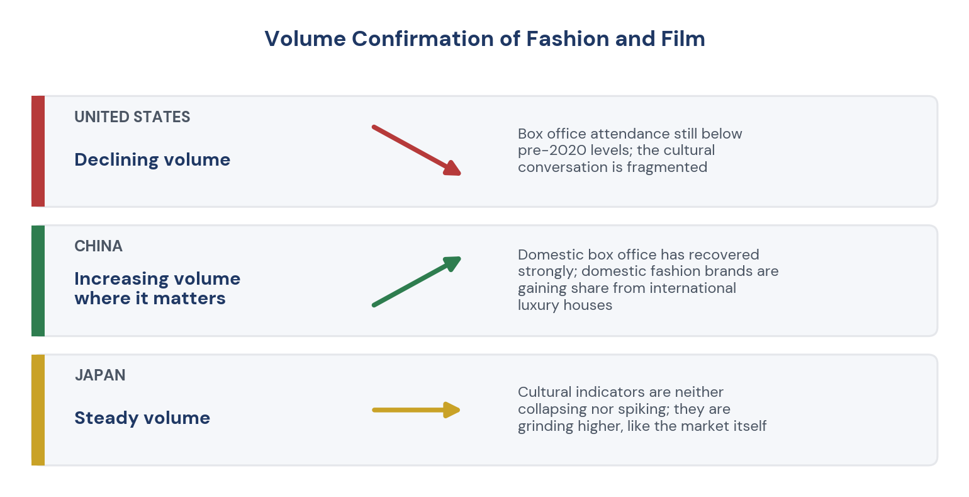 Figure 3. Volume confirmation in fashion and film: the United States, China and Japan.
What This Means for Our Portfolio
The cultural reading reinforces everything we have already written. The United States is in the late distribution phase. Valuations are extreme. Sentiment is stretched. The crowd is chasing technology stocks at near-record allocations. This is not the time to be aggressive. This is the time to be defensive. Our forty percent cash position, our short semiconductor positions, and our selective value purchases in hated sectors are exactly where Dow Theory would place us.
China is in the accumulation phase. The prices are cheap. The sentiment is terrible. The cultural mood is sober. But the timing is not yet right for us. We believe the global risk-off trade has further to run. When the S&P 500 breaks below 5,000, Chinese stocks will likely get dragged down with everything else. That will be our accumulation opportunity. We are watching. We are waiting. We are ready.
Japan is in the sweet spot — the transition from accumulation to early participation. This is where we want to be. Our semiconductor equipment positions are small, patient accumulations. We are adding on weakness. We are not chasing strength. We are following the Dow principle of aligning with the primary trend while respecting the vulnerability of secondary reactions.
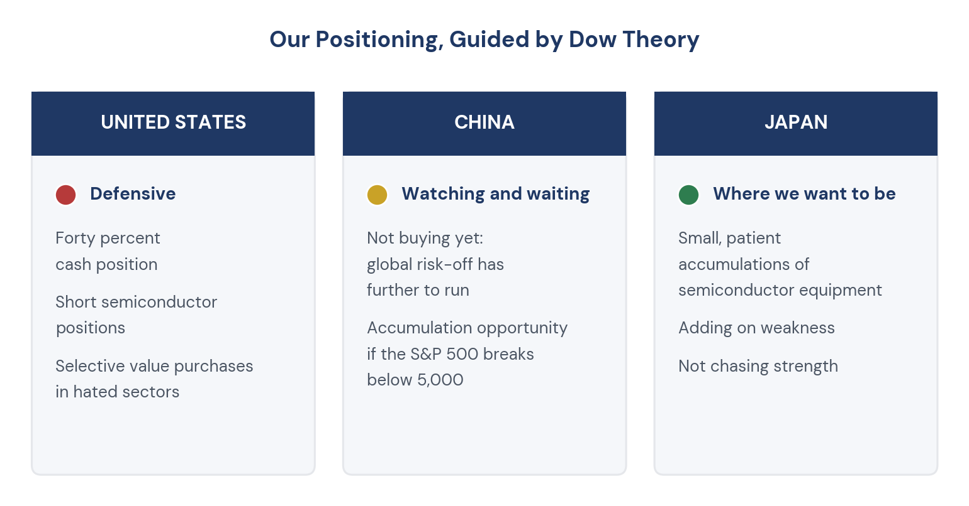 Figure 4. Our positioning in each market, guided by Dow Theory.
The Final Dow Lesson
The sixth tenet of Dow Theory is the most psychologically demanding: a trend persists until a clear reversal is proven. This means we do not exit a trend because we feel uncomfortable or because we have made enough money. We exit when the structure breaks.
By cultural measures, the American primary bull trend has not yet conclusively reversed. The mood is exhausted but not panicked. The headlines are nervous but not apocalyptic. The fashion is fragmented but not uniformly bearish. This means the primary trend could continue grinding higher for longer than seems reasonable. That is why we are not shorting the broad market — only semiconductors. That is why we maintain a forty percent cash position rather than eighty percent. We respect the trend even as we prepare for its end.
The Dow view of China is clearer. The primary bear trend that began in 2021 has likely ended. The accumulation phase is underway. The reversal is in process. We are waiting for confirmation in the form of lower prices and broader capitulation. When that confirmation arrives, we will act decisively.
And Japan? The primary bull trend is intact. The secondary reactions are buying opportunities. The cultural mood is supportive. We are positioned accordingly.
The market is a mood ring. Fashion, film, and headlines tell us what the mood is. Dow Theory tells us what to do about it. We are following both.
DISCLAIMER This newsletter is published for informational and educational purposes only. Nothing contained herein constitutes investment advice, a solicitation, or a recommendation to buy or sell any financial instrument. All investment involves risk, including the loss of principal. Past commentary does not guarantee future results. Any views expressed are those of the author as of the date of publication and are subject to change without notice. Please consult a licensed financial advisor before making any investment decisions. |