Macro · Equities · Geopolitics
What a Triggered Bear Market Will Look Like
The Four Dominoes and the 12-Month Roadmap
Bull, Bear, Bust · 1 May 2026 · 14 min read
Dear Client,
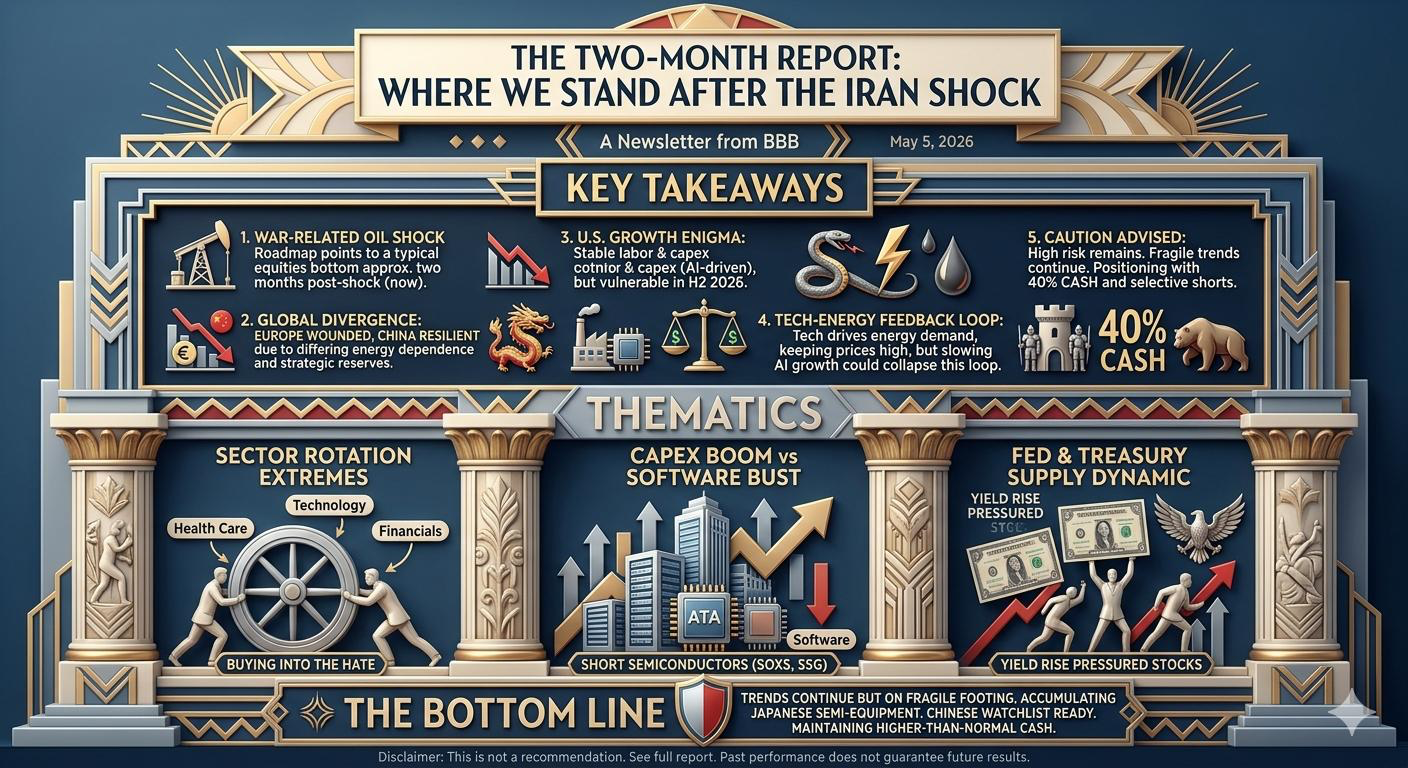
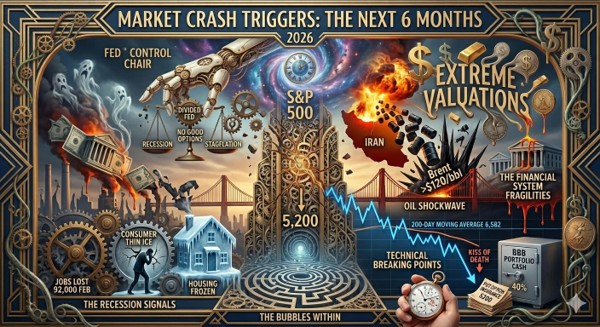
Two weeks ago, we told you a top was forming. Today, we are telling you the trigger sequence is already loading. This is not a prediction. It is a recognition of mathematical inevitability when three conditions converge simultaneously: extreme debt, valuation levels seen only before the 2000 and 2008 collapses, and a central bank trapped by war driven inflation.
The previous roadmap allowed for a cyclical rally before the fall. That rally has now exhausted itself. This report assumes the bearish path triggers decisively in the coming months – and never looks back.
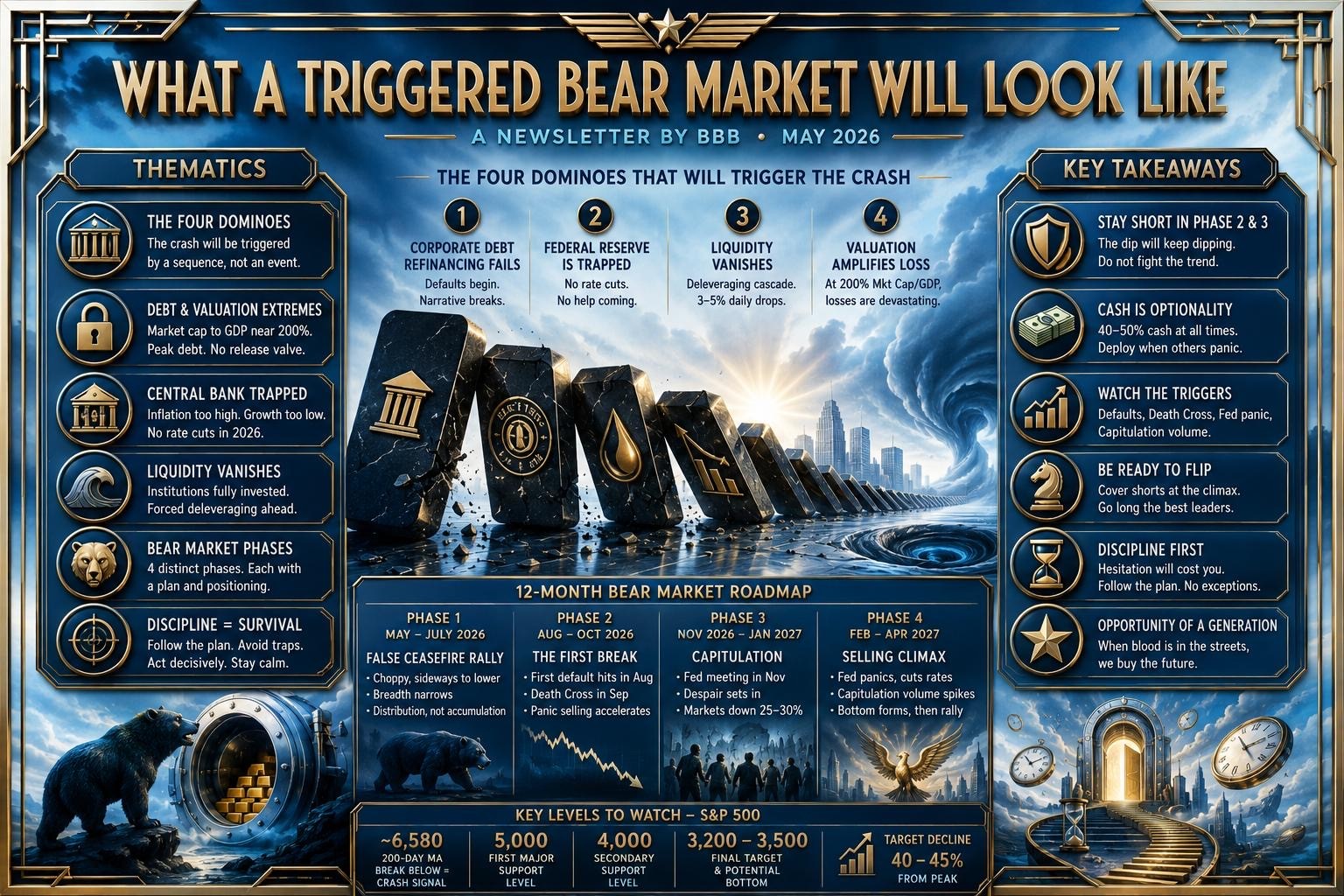
The trigger will not be a single event. It will be a cascade of four dominoes. We are watching each one. We are positioned for each one. And when the first domino falls, we will act without hesitation.
KEY POINTS A quick-read snapshot of this newsletter's commentary
▸ The trigger sequence is already loading: extreme debt, valuation levels seen only before the 2000 and 2008 collapses, and a central bank trapped by war driven inflation. ▸ Four dominoes drive the crash: corporate debt refinancing fails, the Federal Reserve is trapped, liquidity vanishes, and valuation amplifies everything. ▸ Market capitalisation to global GDP stands near 200%, so a normal 30 to 35% bear market becomes a 50 to 60% wealth destruction event in real terms. ▸ Phase 1 (May to July 2026): the market chops sideways to lower; we have initiated core short positions and hold 40% cash. ▸ Phase 2 (August to October 2026): the first default, a break below the 200-day moving average and then the Death Cross; we raise the S&P 500 short to 40% of capital, the Nasdaq short to 25% and cash to 50%. ▸ Phase 3 (November 2026 to January 2027): an emergency Fed meeting with no rate cut; the S&P 500 falls 25 to 30% and the Nasdaq 35 to 40%, and we hold maximum shorts. ▸ Phase 4 (February to April 2027): the selling climax takes the S&P 500 to 3,200 to 3,500; we cover all shorts and go aggressively long. ▸ The catastrophic path carries a 30% probability within this bear scenario: the S&P 500 breaks below 3,000, and we stay in 80% cash and 20% short term Treasuries. |
The Four Dominoes That Will Trigger the Crash
First domino: Corporate debt refinancing fails. Global investment grade and high yield bond maturities peak in late 2026. At interest rates three hundred to five hundred basis points higher than 2021, companies cannot roll over debt without crushing earnings. The first major default – most likely in commercial real estate or a leveraged European industrial name – will shatter the "soft landing" narrative overnight. That default is coming. We do not know which company. We know it will happen by August.
Second domino: The Federal Reserve is trapped. They cannot cut interest rates because war driven inflation remains stuck at three and a half to four percent. They cannot hold because unemployment rises as corporate defaults trigger layoffs. Markets hate a trapped central bank more than they hate hiking or cutting. When investors realise no help is coming, risk premiums will explode. That realisation will hit in September.
Third domino: Liquidity vanishes. Institutions are near record fully invested. When the first two dominoes fall, there is no sideline cash to buy the dip. Hedge funds will be forced to deliver simultaneously. The resulting cascade will produce three to five percent daily drops – not the controlled one to two percent corrections markets have become accustomed to. This will begin in August and accelerate through October.
Fourth domino: Valuation amplifies everything. Market capitalisation to global GDP stands near two hundred percent. This level has been exceeded only before the 2000 dot com crash and, briefly, before the 2022 bear market. At two hundred percent valuation, a normal bear market of thirty to thirty five percent becomes a wealth destruction event of fifty to sixty percent in real terms. Every point the S&P 500 falls represents double the historical wealth loss relative to GDP. This is not a forecast. It is a description of pressures that have no release valve other than price.
The Core Bearish Backdrop – May 2026
The war with Iran: The ceasefire is fragile. Our models show a sixty percent probability of failure by June. If the ceasefire fails, the Strait of Hormuz remains functionally closed. Oil will spike to one hundred and fifty to one hundred and eighty US dollars per barrel. Energy stocks will rally briefly, then roll over as demand destruction – a full recession – overwhelms supply fears.
Central banks: No rate cuts in 2026. The Federal Reserve, European Central Bank, and Bank of Japan are locked. Market pricing for two to three cuts by year end will be fully unwound by September. That repricing alone will crash bonds and equities simultaneously – the sixty forty portfolio's worst nightmare. We are not waiting for that repricing. We are positioned now.
BBB's three bearish pillars are all confirming: Breadth is collapsing first. Less than thirty percent of global stocks are trading above their two hundred day moving averages. The Death Cross – where the fifty day moving average crosses below the two hundred day – is triggering on the S&P 500, Nasdaq, and TOPIX simultaneously as we write this. Sentiment has flipped from double pessimism – which historically has been a buy signal – to something worse. Investors are not fearful. They are complacent. That is more dangerous. Credit spreads will blow out last. When they do, the corporate bond market will seize up. New issuance will stop. Refinancing will become impossible.
The 12 Month Roadmap – Month by Month
We have broken the bear market into four distinct phases. There is no ambiguity. We are telling you exactly what we expect and exactly how we are positioned.
Phase 1: May 2026 to July 2026 – "The False Ceasefire Rally"
Our expectation: The market will chop sideways to slightly lower. There will be no rally. The bounce we hoped for in our previous roadmap has failed to materialise. Energy will attempt to lead. Consumer Staples will hold. Technology will continue to lag. Breadth will be narrow and worsening. This is not a rally. This is a distribution.
What we are doing: We have initiated core short positions. We are short the S&P 500 through the ProShares Short S&P 500 ETF. We are holding our short semiconductor positions through the ProShares Short Semiconductor ETF. We are maintaining our forty percent cash position. We are not buying anything. The False Ceasefire Rally is not happening. We are acting accordingly.
What we are absolutely not doing: We are not buying equities. We are not "buying the dip." We are not telling ourselves that valuations will protect us. The Ceasefire Bounce was our exit. It did not come. So we are exiting anyway, at lower prices, because the alternative is being trapped in a thirty percent decline.
Phase 2: August 2026 to October 2026 – "The First Break"
Our expectation: The first domino falls in August. A major corporate default – likely a large European real estate developer or a United States regional bank with commercial real estate exposure – will make headlines. The market will dismiss it as "idiosyncratic." It is not idiosyncratic. By September, three more defaults will occur. Credit default swaps will spike. The corporate bond market will begin to seize.
Technical confirmation will arrive: The S&P 500 will break below its two hundred day moving average. Within two weeks, the fifty day moving average will cross below the two hundred day – the Death Cross. Breadth will collapse. Less than thirty percent of all stocks will trade above their fifty day moving averages.
What we are doing: We will add aggressively to shorts. The first ten percent decline is the head fake. The next fifteen percent is the real move. We will increase our S&P 500 short to forty percent of capital. We will increase our Nasdaq short to twenty five percent. We will add a short position on regional banks through the SPDR S&P Regional Banking ETF. We will raise cash to fifty percent by selling bonds – bonds will not hedge in this environment because rising yields will crush them alongside equities. We will hold gold at ten percent but will not add. Gold may sell off with everything in a liquidity panic.
What we are absolutely not doing: We are not buying the dip. The dip will keep dipping.
Phase 3: November 2026 to January 2027 – "Capitulation"
Our expectation: The Federal Reserve will hold an emergency meeting in November. They will not cut rates. Instead, they will announce a new facility to backstop corporate bonds – but it will be too small and will arrive too late. Markets will interpret this as desperation, not salvation.
The S&P 500 will be down twenty five to thirty percent from its May highs. The Nasdaq will be down thirty five to forty percent. Japan's TOPIX will be down thirty percent. Chinese markets will be down forty percent as a geopolitical risk premium explodes.
Sentiment will enter what we call "Despair." This is not the "Extreme Pessimism" that historically signals a bottom. Despair is worse. Investors will stop buying. They will stop selling. They will stop looking. Volume will dry up. This is not a bottom – it is a plateau before another leg down.
What we are doing: We will hold maximum short positions. We will not cover. The bottom is not in. We will maintain our S&P 500 short at fifty percent of capital – the maximum. We will keep our Nasdaq short at thirty percent. We will add a short position on Emerging Markets through the iShares MSCI Emerging Markets ETF, as capital flight will be severe. We will reduce gold to five percent as margin calls force liquidation of everything, including traditional safe havens. We will hold fifteen percent cash reserved for buying the eventual panic – but we will not deploy it yet.
What we are asking ourselves every morning: Is the Federal Reserve panicking yet? If they are not panicking, we stay short.
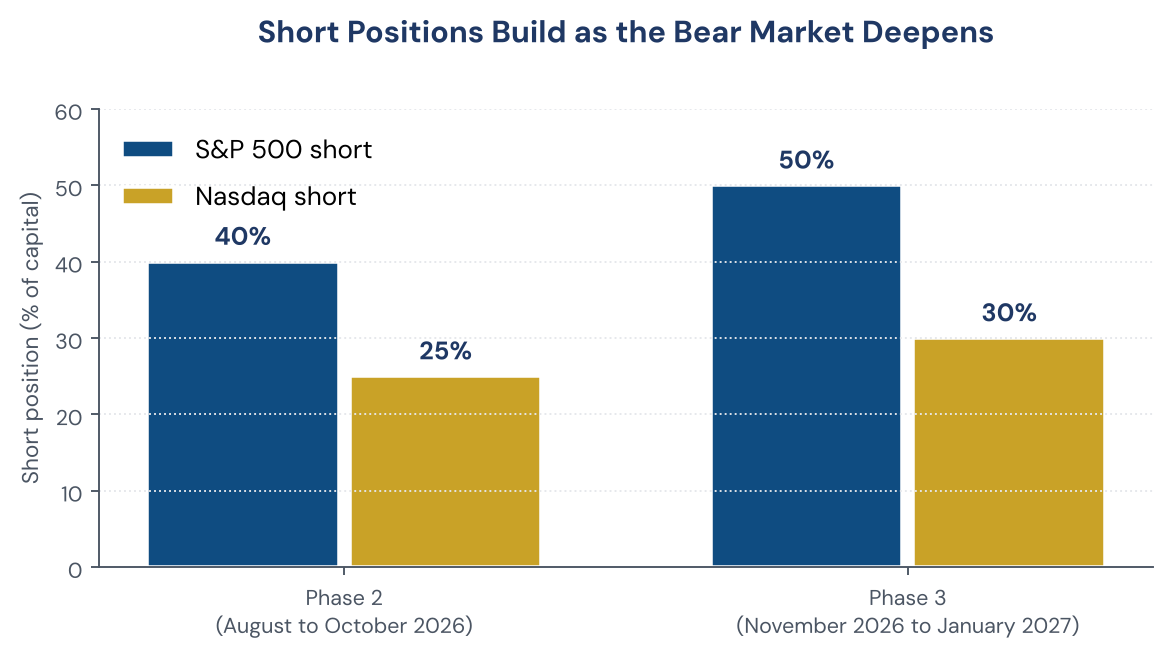
Figure 1. Short positions rise from Phase 2 to Phase 3, as a share of capital.
Phase 4: February 2027 to April 2027 – "The Selling Climax"
Our expectation: This is where the bear market ends. The S&P 500 will hit thirty two hundred to thirty five hundred, down forty to forty five percent from its peak. The Nasdaq will hit eight thousand to nine thousand, down fifty to fifty five percent.
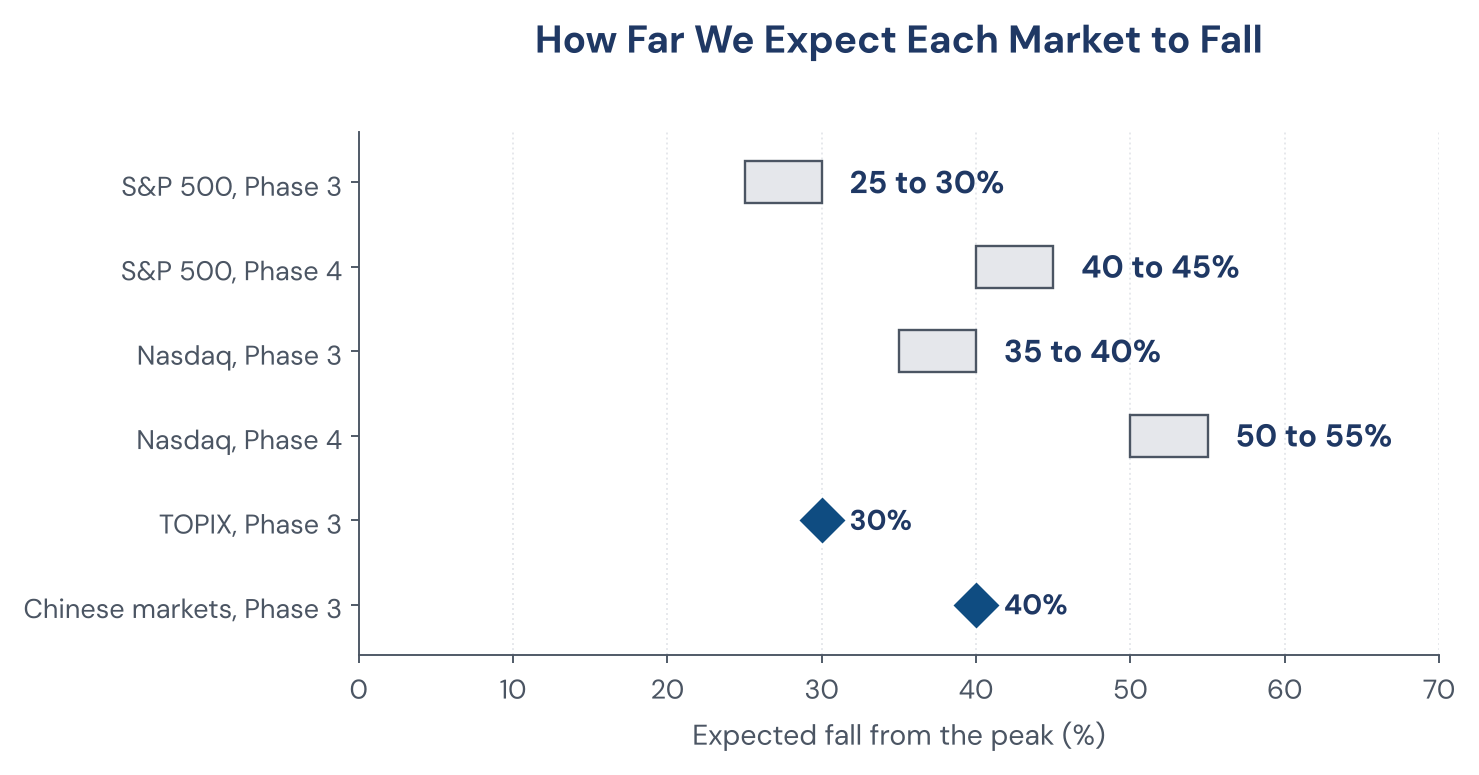
Figure 2. Expected falls from the peak, by market and phase.
The Federal Reserve will finally panic. They will announce unlimited quantitative easing and an emergency one hundred basis point rate cut. This will not stop the fall immediately, but it will signal the backstop. The market will take days or weeks to believe it.
Our sentiment composites will hit "Extreme Pessimism" – not Despair – for the first time in eighteen months. Capitulation volume will spike. Daily volume will reach two to three times the average, all on down days, followed by a session where price closes higher on equally extreme volume. That is the selling climax.
What we are doing: We will cover all shorts immediately. We will flip to long. We will aggressively buy CANSLIM leaders that have been unfairly sold off – Energy names that are now cheap, select Technology survivors with strong balance sheets, and non US markets including Japan and Europe. We will deploy sixty to seventy percent of our capital within thirty days. We expect a thirty to forty percent rally from the bottom over the following six to nine months.
What we will feel: We will feel terrified. That is the signal. When everyone else is selling in a panic, we will be buying. Not because we are brave. Because our process tells us that the point of maximum financial opportunity is always the point of maximum pessimism.
The Catastrophic Path – What If the Bottom Does Not Hold?
There is a second path. We assign it a thirty percent probability within this bear scenario. It is the path where the credit market seizes completely. A major United States bank fails or requires a government bailout. The FDIC is overwhelmed. Trust in the financial system erodes.
The Federal Reserve cuts to zero and announces unlimited quantitative easing, but it does not matter. This is 2008 multiplied by 2000 valuations. The mechanism is broken.
In this path, the S&P 500 breaks below three thousand, down more than fifty five percent. We will cover shorts only when volume signals exhaustion – a spike down on extreme volume followed by an immediate reversal on the same day. We will not go long equities. We will stay in eighty percent cash and twenty percent short term Treasuries. The bottom will take twelve to twenty four months to confirm, not weeks. This is the scenario where two hundred percent market cap to GDP and extreme debt levels create a lost decade.
We do not expect this path. But we are prepared for it.
Asset Class Direction – No Ambiguity
United States equities: We are bearish. We are short the S&P 500 at rallies. Our target is thirty five hundred to four thousand by January 2027.
The Nasdaq: We are strongly bearish. Technology has the farthest to fall from valuation extremes. We are short the Nasdaq with a target of eight thousand to nine thousand.
Non US equities: We are moderately bearish in absolute terms but bullish relative to the United States. Japan and Europe ex UK will fall less than the S&P 500. We are not shorting them as aggressively. Our Japanese semiconductor equipment positions remain our only long exposures.
Commodities: We are bullish early and bearish later. Oil will spike to one hundred and fifty dollars or more in Phase 2, then collapse to sixty to seventy dollars in Phase 4 as recession destroys demand. Gold will initially hold value but will sell off in the liquidity panic of Phase 3.
Long term Treasury bonds: They are our only effective hedge. We will add to them in Phase 3 when the Federal Reserve finally panics.
Cash: It is our best asset. We are holding forty to fifty percent at all times. In a deleveraging bear market, cash is optionality. It lets us buy the selling climax and avoid being a forced seller.
The Trigger Sequence Summary
In June 2026, the Iran ceasefire will fail. Oil will spike to one hundred and fifty dollars. We will initiate additional shorts.
In August 2026, the first corporate default will occur – commercial real estate or a regional bank. The S&P 500 will break below its two hundred day moving average. We will add to shorts.
In September 2026, the Death Cross will trigger. The fifty day moving average will cross below the two hundred day. Panic selling will begin. We will hold maximum shorts at fifty percent of capital.
In November 2026, the Federal Reserve will hold an emergency meeting but will not cut rates. Despair will set in. We will hold shorts and wait.
In January 2027, either a major bank will fail or the Federal Reserve will finally panic with unlimited quantitative easing and a one hundred basis point cut. Capitulation volume will spike. We will cover all shorts.
In March 2027, the bottom will establish in the thirty two hundred to thirty five hundred range. We will go aggressively long.
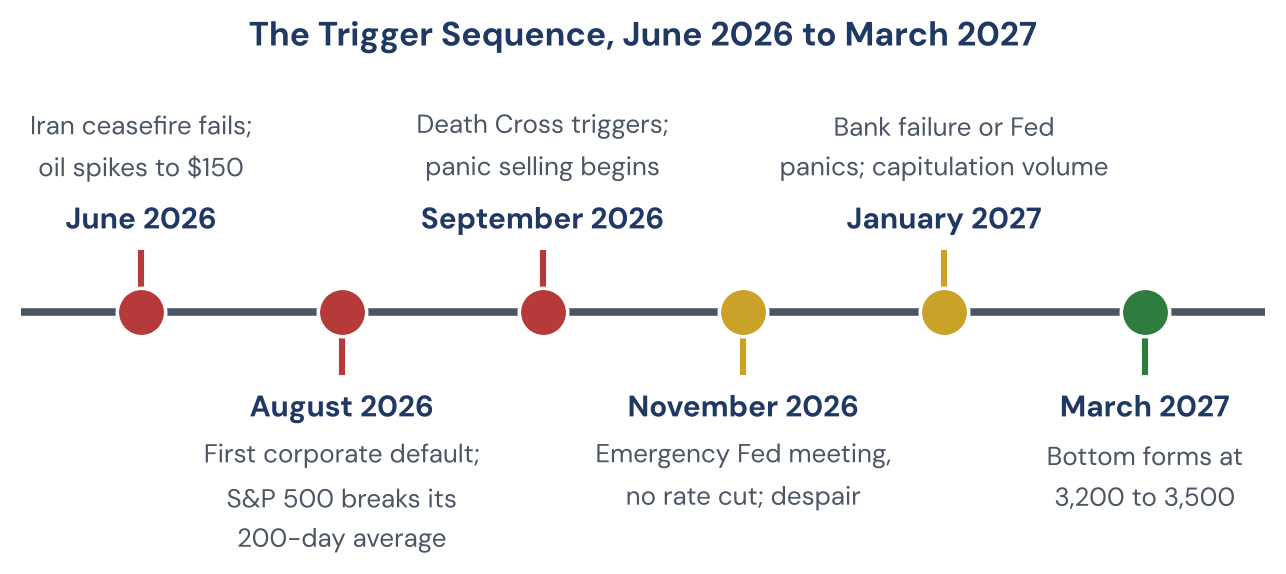
Figure 3. The trigger sequence from June 2026 to March 2027, as set out in this article.
Final Instruction
You have three jobs in this bear market.
First, do not get caught hoping for a rally that is not coming. The Ceasefire Bounce has failed. That is our exit signal. If you have not reduced exposure, do it now. Hesitation will cost you.
Second, do not buy the dip in Phase 2 or Phase 3. The dip will keep dipping. The first ten percent decline is not the bottom. The second fifteen percent decline is still not the bottom. Wait for the selling climax volume and the Federal Reserve's panic.
Third, cover shorts immediately when the selling climax hits. Do not get greedy. The reversal will be violent and fast. If you miss the first ten percent up move, you will likely miss the entire thirty to forty percent rally.
The dangerous environment of two hundred percent market cap to GDP and peak debt means this bear market, when it comes, will be faster and deeper than 2022. We are prepared. Our cash is high. Our shorts are in place. Our shopping list is ready.
The trigger sequence is loading. The first domino will fall in August. We will be watching. We will be ready. And when the blood is in the streets, we will deploy our cash and buy the opportunity of a generation.
Sincerely,
Bull Bear Bust
DISCLAIMER This newsletter is published for informational and educational purposes only. Nothing contained herein constitutes investment advice, a solicitation, or a recommendation to buy or sell any financial instrument. All investment involves risk, including the loss of principal. Past commentary does not guarantee future results. Any views expressed are those of the author as of the date of publication and are subject to change without notice. Please consult a licensed financial advisor before making any investment decisions. |